
How to Keep Memory Sharp With Age: Psychology-Backed Tips

You walk into a room and forget why you’re there. A familiar name escapes you mid-conversation. You can’t quite recall where you left your phone. Again.
These moments feel alarming, particularly as we age. The immediate worry: “Is this the beginning of something serious?” The reality is usually far less dramatic. Most age-related memory changes are completely normal — frustrating, certainly, but not indicators of decline into dementia. Understanding how to keep memory sharp with age starts with separating fact from fear.
Understanding the difference between normal cognitive ageing and genuine memory disorders matters enormously. So does knowing that you have substantial control over how your brain ages. Research in cognitive psychology and neuroscience reveals that memory and mental sharpness aren’t predetermined by your genes or age — they’re significantly influenced by how you live, learn, and engage with the world.
This article explores evidence-based strategies to keep your memory sharp as you age, focusing on psychology-backed approaches that emphasise growth and capability rather than fear and decline. The news is genuinely encouraging: your brain remains remarkably plastic and responsive to positive change throughout your entire life.
Understanding Normal Memory Changes With Age
Before exploring how to keep memory sharp with age, it helps to distinguish what’s actually happening in an ageing brain versus the catastrophic narratives we often imagine.
Normal cognitive ageing typically begins subtly in our 30s and 40s, though most people don’t notice changes until later. The brain undergoes structural changes: a slight reduction in volume, particularly in the hippocampus (crucial for forming new memories) and frontal lobes (important for planning and decision-making). Neural connections become somewhat less efficient. Processing speed slows marginally.
These biological changes manifest as:
Slower information processing. Learning new material takes a bit longer than it once did. You might need to read instructions twice rather than once, or require extra time to master new technology.
Reduced working memory capacity. Holding multiple pieces of information in mind simultaneously becomes more challenging. Following complex conversations whilst also tracking several related topics feels harder than it used to.
Tip-of-the-tongue moments. That frustrating experience where you know you know something but can’t quite retrieve it — typically names or specific words — becomes more frequent. The information is stored; accessing it just takes longer.
Increased distractibility. Filtering out irrelevant information requires more conscious effort. Background conversations or visual distractions interfere with concentration more than they did in younger years. Developing strong focus strategies becomes more important as we age.
What’s crucial to understand: these changes affect the speed and efficiency of memory processes, not the fundamental capacity to remember. You’re not losing memories or becoming incapable — you’re experiencing a system that works a bit slower and requires more focused attention.
Contrast this with dementia, which causes progressive loss of cognitive abilities that genuinely interfere with daily functioning. Forgetting where you put your keys is normal ageing; forgetting what keys are for signals something more serious. Struggling to remember an acquaintance’s name is typical; failing to recognise close family members isn’t.
The distinction matters because the belief that memory inevitably declines dramatically with age becomes a self-fulfilling prophecy. Research demonstrates that when older adults are exposed to negative stereotypes about aging and memory, their performance on memory tasks worsens. When given positive messages about cognitive preservation, performance improves — a finding replicated across multiple laboratory and longitudinal studies.
Your expectations about ageing affect your actual cognitive performance. Approaching memory changes with understanding and proactive strategies rather than resignation and anxiety fundamentally changes outcomes.
Build Cognitive Reserve to Keep Memory Sharp With Age
One of the most powerful concepts in aging research is cognitive reserve — essentially, your brain’s resilience in the face of age-related changes or damage. People with greater cognitive reserve can tolerate more brain pathology before showing symptoms of decline.
Think of cognitive reserve as your brain’s redundancy system. When one neural pathway becomes less efficient, a brain with substantial reserve can recruit alternative pathways to accomplish the same task. This explains why some individuals show considerable brain changes typical of Alzheimer’s disease during autopsy yet remained cognitively sharp throughout life — their cognitive reserve compensated for physical deterioration.
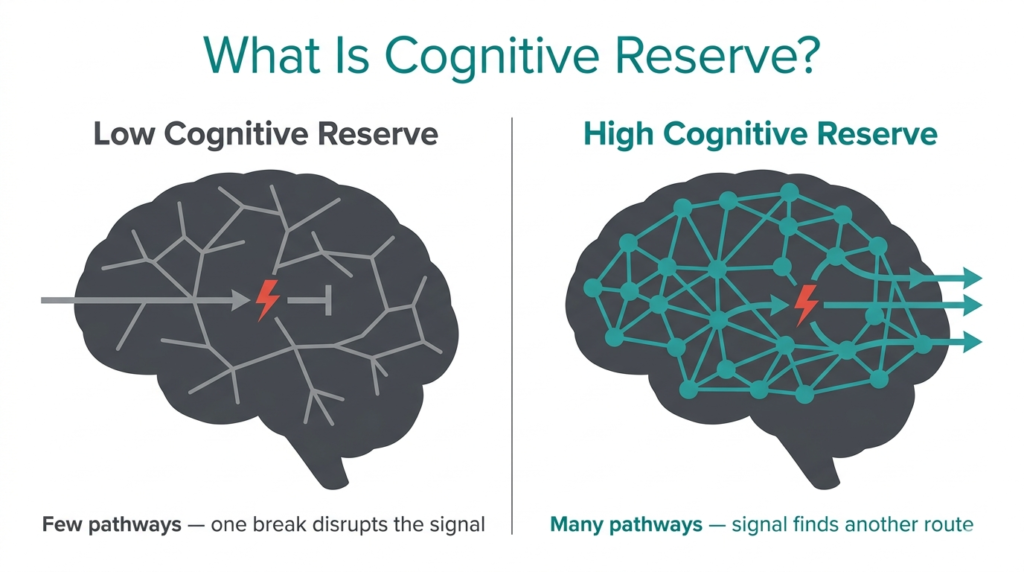
The encouraging news: you build cognitive reserve through learning, challenge, and novelty throughout your entire lifespan. It’s never too late to strengthen this neurological cushion.
Pursue education and intellectual challenge. Higher education correlates with better cognitive function in older age, but the mechanism isn’t about credentials — it’s about developing the habit of mental engagement. Whether through formal education, self-directed learning, online courses, or deep reading, intellectual challenge builds neural connections that enhance reserve. Taking notes effectively can also help to organise and retain what you learn.
Learning a new language represents one of the most powerful cognitive challenges available. It demands simultaneous engagement of memory systems, pattern recognition, executive function, and communication skills. Research consistently shows that bilingual individuals develop dementia symptoms several years later than monolinguals with comparable education and health status.
Master new skills requiring coordination between cognitive and physical systems. Learning musical instruments, complex dance forms, or intricate crafts like quilting creates particularly robust neural growth. These activities demand integration of motor control, timing, memory, and often social coordination — engaging multiple brain systems simultaneously.
As someone who’s conducted cognitive assessments for over 20 years, I’ve observed that individuals who remain actively engaged in learning — whether it’s mastering computer skills at 70, learning watercolour painting at 80, or studying local history at 90 — consistently demonstrate sharper cognitive function than their peers who’ve settled into purely passive entertainment.
Embrace novelty and variety. Your brain thrives on new experiences. Visiting unfamiliar places, trying different cuisines, exploring new topics, and breaking established routines all stimulate neural plasticity. The discomfort of novelty — that slightly awkward feeling when doing something unfamiliar — signals your brain is adapting and growing.
The “use it or lose it” principle isn’t just folk wisdom — it’s neurological reality. Mental challenge stimulates neurogenesis (growth of new neurons) and synaptogenesis (formation of new connections between neurons) throughout life. Stop challenging your brain, and these processes slow. Maintain consistent cognitive engagement, and your brain continues building reserve well into advanced age.
QUICK WIN:
Pick one genuinely new cognitive challenge this week — not something you’re already good at. Learn three chords on a ukulele, start a beginner’s language app, or sign up for a local evening class. The discomfort you feel is your brain forming new neural connections. That discomfort is the point.
Prioritise Physical Exercise to Keep Memory Sharp With Age
The connection between physical fitness and cognitive health is one of the most robust findings in ageing research. Aerobic exercise doesn’t just keep your heart healthy — it directly supports brain structure and function in ways that help keep memory sharp with age.
Regular physical activity increases blood flow to the brain, delivering oxygen and nutrients essential for neural health. Exercise also stimulates production of brain-derived neurotrophic factor (BDNF), a protein that promotes neuron growth, supports existing brain cells, and enhances connections between neurons. Think of BDNF as fertiliser for your brain — and exercise is one of the most reliable ways to produce it.
Research demonstrates that people who maintain regular physical activity throughout middle and later life show less brain atrophy, better preserved hippocampal volume, and superior cognitive performance compared to sedentary peers. The effect is substantial: regular exercise can effectively turn back the clock on brain ageing by several years.
Aim for regular aerobic exercise. Activities that elevate heart rate — brisk walking, cycling, swimming, dancing — show the strongest cognitive benefits. The NHS recommends 150 minutes of moderate-intensity aerobic activity weekly for adults, a target that supports both physical and cognitive health.
You don’t need to become a marathon runner. (Frankly, if you’ve made it to 60 without developing a passion for running, you’re probably not going to start now. And that’s absolutely fine.) Even moderate-intensity walking produces measurable cognitive benefits. The key is consistency rather than intensity.
Include strength and balance training. Whilst aerobic exercise shows the strongest evidence for memory benefits, resistance training and balance exercises contribute to overall brain health by maintaining physical capabilities that support active, independent living. An active lifestyle enables continued engagement in cognitively stimulating activities.
Combine physical and cognitive challenge. Activities requiring coordination, strategy, and movement simultaneously — such as tennis, ballroom dancing, or team sports — provide dual benefits. You’re exercising your body whilst also engaging executive function, spatial awareness, and social cognition.
The mechanism appears to be that physical activity creates optimal conditions for neural plasticity and repair whilst the cognitive demands of complex activities direct that plasticity toward building useful cognitive skills. You get both the biological benefits of exercise and the cognitive benefits of mental challenge. This is one of the most powerful strategies available for keeping memory sharp as you age.
Protect Memory Through Quality Sleep
Sleep isn’t merely rest — it’s when your brain performs essential maintenance and memory consolidation. During sleep, your brain processes and stores the day’s experiences, transferring information from temporary working memory into more permanent long-term memory. Skimp on sleep, and this critical process suffers. Understanding the role of why we forget makes clear just how central sleep is to keeping memory sharp with age.
Recent research reveals that during deep sleep, cerebrospinal fluid washes through the brain, clearing metabolic waste products including proteins associated with Alzheimer’s disease. This “brain rinse cycle” appears crucial for long-term cognitive health. Chronic sleep deprivation not only impairs immediate memory function — it may also increase risk of developing dementia later in life.
Poor sleep affects memory in multiple ways:
Impaired encoding. When you’re sleep-deprived, your brain struggles to form new memories effectively. You might attend a lecture or read important information, but without adequate sleep beforehand, that information simply doesn’t encode properly into memory.
Disrupted consolidation. Sleep after learning is equally crucial. Memory consolidation happens primarily during sleep. Without sufficient quality sleep, memories remain fragile and easily forgotten.
Reduced cognitive efficiency. Sleep deprivation impairs attention, working memory, and decision-making — all cognitive functions that support effective memory in daily life.
Unfortunately, sleep quality often deteriorates with age due to changes in circadian rhythms, medical conditions, or medications. This makes protecting sleep even more important for older adults.
Maintain consistent sleep schedules. Go to bed and wake at similar times daily, even on weekends. Your brain thrives on predictable rhythms.
Create an optimal sleep environment. Dark, quiet, cool bedrooms promote better sleep quality. Consider blackout curtains, white noise machines, or earplugs if needed.
Limit alcohol consumption. Whilst alcohol might help you fall asleep initially, it disrupts sleep architecture and prevents the deep sleep crucial for memory consolidation. The supposed nightcap often causes more cognitive harm than good.
Address sleep disorders promptly. Conditions like sleep apnoea significantly impair cognitive function and increase dementia risk. If you experience chronic sleep problems, consult your GP rather than accepting poor sleep as inevitable.
Seven to nine hours of quality sleep isn’t a luxury for older adults — it’s a cognitive necessity. Prioritising sleep represents one of the most impactful interventions available for keeping memory sharp with age.

Optimise Nutrition for Cognitive Health
The adage “what’s good for your heart is good for your brain” reflects genuine physiological reality. Cardiovascular health and brain health are inextricably linked — conditions that damage blood vessels (hypertension, high cholesterol, diabetes) also impair cognitive function by reducing blood flow to the brain.
Specific dietary patterns show particularly strong evidence for supporting cognitive health as we age:
Mediterranean-style eating. This pattern — emphasising vegetables, fruits, whole grains, legumes, fish, olive oil, with moderate wine and minimal red meat — consistently associates with better cognitive function and reduced dementia risk. The combination of anti-inflammatory foods, healthy fats, and abundant antioxidants appears to protect brain tissue from age-related damage.
MIND diet. Specifically designed for brain health, the MIND diet combines elements of Mediterranean and DASH (blood pressure management) diets. Research suggests it may be even more protective against cognitive decline than either diet alone.
Key components include:
Leafy greens and vegetables. Rich in vitamins, minerals, and antioxidants that protect neurons from oxidative stress.
Berries. Particularly blueberries and strawberries, which contain flavonoids shown to improve memory and slow cognitive decline.
Nuts and olive oil. Sources of healthy fats that support brain cell structure and reduce inflammation.
Fish. Especially fatty fish like salmon and mackerel, providing omega-3 fatty acids crucial for brain cell membranes and communication between neurons.
Limit harmful foods. Reduce consumption of red meat, butter, cheese, sweets, and fried foods. Trans fats in particular appear to directly damage brain cells and impair their ability to communicate.
Whilst no single “superfood” prevents cognitive decline, the overall pattern of eating matters enormously. The Mediterranean and MIND diets aren’t restrictive or punishing — they’re approaches that can be sustained long-term, which is precisely what’s needed for brain health.
Maintain Social Connections
Social isolation and loneliness aren’t just emotionally painful — they’re cognitively dangerous. Research consistently demonstrates that people with rich social networks and regular meaningful interactions maintain better cognitive function as they age compared to socially isolated peers.
The mechanism appears multifaceted. Social interaction is cognitively demanding: you must follow conversation, interpret social cues, remember shared history, regulate emotions, and coordinate communication. These demands provide excellent exercise for multiple cognitive systems simultaneously.
Social engagement also protects against depression, which significantly impairs memory and increases dementia risk. The emotional support and sense of purpose derived from relationships contribute to overall wellbeing in ways that directly benefit cognitive health.
Studies of “super-agers” — individuals in their 80s and beyond who maintain memory performance equivalent to people decades younger — consistently identify one distinguishing factor: high-quality, satisfying relationships. It’s not the quantity of social contacts but the quality of emotional connection that matters.
Prioritise meaningful relationships. Invest time in friendships and family connections that provide genuine emotional support, intellectual stimulation, and shared interests.
Join groups and activities. Book clubs, volunteer organisations, classes, sports leagues, or community groups provide regular social interaction structured around shared interests. The combination of social engagement and purposeful activity provides particularly robust cognitive benefits.
Embrace technology for connection. Video calls with distant family, online communities, or social media (used thoughtfully) can supplement in-person interaction. The goal is meaningful connection, regardless of medium.
Combat isolation actively. If mobility limitations, geography, or life circumstances make maintaining social connections challenging, deliberately create alternatives. Telephone conversations, correspondence, or participation in online communities can provide cognitive benefits when in-person interaction isn’t feasible.
Your brain is fundamentally social. Keeping memory sharp with age requires keeping it connected.
QUICK WIN:
Schedule one social commitment this week that involves genuine conversation — not passive shared activity like watching television together. A phone call, a meal with a friend, a group class. The cognitive demands of real conversation are significantly higher than passive social presence, and that’s precisely what makes it valuable for memory.
Use External Memory Aids Strategically
One persistent myth about memory is that using external aids — calendars, lists, reminders — represents cognitive weakness or laziness. This is precisely backwards. Strategic use of external memory systems frees your brain’s limited cognitive resources for more important processing.
Your working memory can hold only about 3–5 items simultaneously. Attempting to remember routine information (appointments, shopping lists, tasks) through pure mental effort wastes this precious cognitive capacity. External systems capture that routine information, allowing you to dedicate mental resources to thinking, problem-solving, and genuine memory challenges.
Maintain consistent capture systems. Use calendars for appointments, lists for tasks and shopping, designated locations for frequently misplaced items (keys, glasses, phone). The specific system matters less than consistency — your brain learns to trust the external system only when it’s reliably maintained.
Embrace technology thoughtfully. Smartphone reminders, note-taking apps, and digital calendars can significantly reduce cognitive load. The key is learning to use these tools effectively rather than allowing them to add complexity.
Create environmental cues. Place objects where you’ll need them as visual reminders. Put bills to pay by your keys, medications by your breakfast location, the book you’re reading on your pillow. These cues trigger action without requiring active remembering.

Using external memory aids isn’t cheating — it’s cognitive wisdom. You’re not trying to prove your memory works; you’re trying to function effectively in daily life. Strategic offloading of routine memory tasks onto external systems is exactly what keeping memory sharp with age looks like in practice.
Apply Memory Techniques for Important Information
Whilst external systems handle routine information, specific memory techniques help you retain genuinely important material — names, faces, key facts, or new knowledge you’re learning.
Elaborate and connect. Simply repeating information rarely creates strong memories. Instead, connect new information to existing knowledge. Ask yourself how this relates to something you already know, why it’s important, or how you might use it. These elaborative connections create multiple retrieval pathways.
Use active recall rather than passive review. Testing yourself on information strengthens memory far more effectively than simply rereading. Close your notes and attempt to recall key points. This retrieval practice is one of the most powerful memory techniques available.
Visualise vividly. Creating mental images of information helps encode it more deeply. When meeting someone new, visualise their name written across their forehead or create an absurd mental image connecting their name to a distinctive feature. The more unusual and vivid the image, the better it works.
Use the memory palace technique for sequences. This ancient method leverages your excellent spatial memory to remember lists or ordered information by mentally placing items along a familiar route. Remarkably, this technique works as effectively in older adults as in younger people.
These techniques require initial effort to learn and apply. But once mastered, they provide reliable methods for keeping memory sharp with age, despite the natural changes in memory efficiency that come with getting older.
Manage Cardiovascular Risk Factors
The connection between cardiovascular health and cognitive health cannot be overstated. Conditions that damage blood vessels — hypertension, diabetes, high cholesterol and obesity significantly increase dementia risk by impairing blood flow to the brain.
What keeps your heart healthy keeps your brain healthy:
Control blood pressure. Hypertension damages small blood vessels in the brain, impairing cognitive function. Maintaining healthy blood pressure through diet, exercise, stress management, or medication when necessary protects both your heart and your brain.
Manage diabetes. Poorly controlled blood sugar damages blood vessels and appears to directly impair memory formation in the hippocampus. Effective diabetes management is crucial for cognitive health.
Maintain healthy cholesterol. High cholesterol contributes to atherosclerosis, reducing blood flow to the brain. Diet, exercise, and medication help maintain healthy levels.
Avoid smoking. Smoking damages blood vessels throughout the body, including those supplying the brain. Quitting smoking at any age provides cognitive benefits.
Limit alcohol consumption. Heavy drinking causes direct brain damage and increases dementia risk. Moderate consumption (up to one drink daily for women, two for men) appears relatively safe, though even moderate drinking may carry some risk. The safest approach for cognitive health is minimal alcohol consumption.
These factors interact multiplicatively rather than additively. Someone with hypertension, diabetes, and high cholesterol faces far more than three times the cognitive risk of someone with none of these conditions. Managing cardiovascular health represents one of the most impactful preventive measures available for keeping memory sharp as you age.
Cultivate a Growth Mindset to Keep Memory Sharp With Age
Perhaps the most important factor in how to keep memory sharp with age is your fundamental attitude toward ageing itself. Research demonstrates that beliefs about ageing become self-fulfilling.
When older adults are primed with negative stereotypes about ageing and memory — even subtly through word associations or brief exposure to negative messages — their performance on memory tasks measurably worsens. When primed with positive messages about cognitive preservation, performance improves.
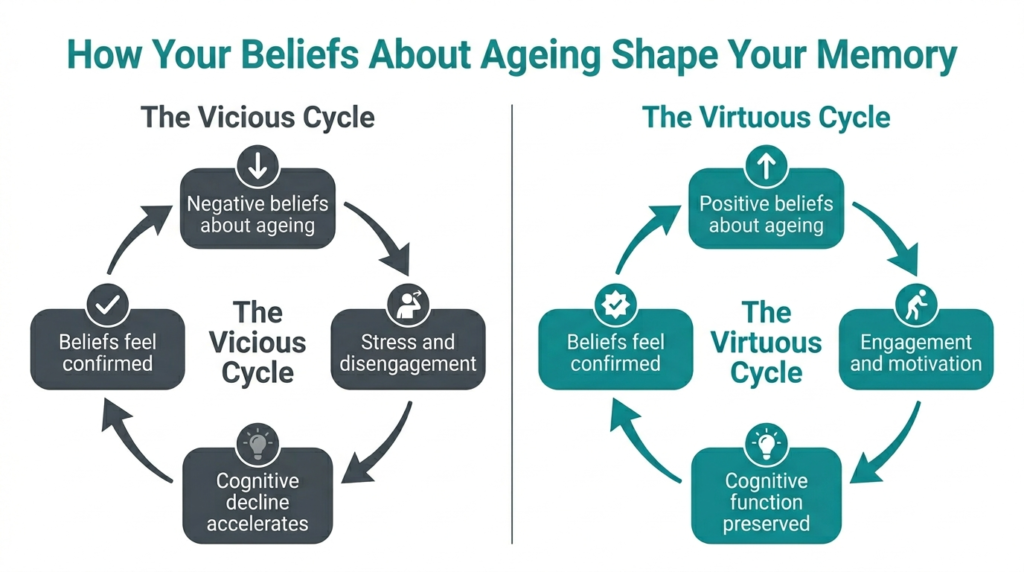
This isn’t merely psychological comfort — it reflects genuine neurological reality. Believing that cognitive decline is inevitable creates stress, reduces motivation for cognitive engagement, and leads to behaviours that actually accelerate decline. Believing that you can influence your cognitive trajectory increases engagement in protective behaviours and appears to directly support better cognitive function.
A growth mindset about ageing involves:
Acknowledging changes without catastrophising. Yes, some aspects of memory slow with age. No, this doesn’t mean inevitable dementia or loss of independence. Changes are typically modest and manageable.
Focusing on preserved abilities. Whilst processing speed may slow, accumulated knowledge, wisdom, emotional regulation, and verbal abilities often improve or remain stable. Older adults frequently excel in areas requiring experience and contextual understanding.
Viewing challenges as opportunities for growth. Learning new skills feels harder because it is harder — your brain must work to forge new neural pathways. This difficulty is precisely what strengthens cognitive reserve. Embrace the challenge rather than avoiding it.
Celebrating cognitive achievements at any age. Whether it’s mastering new technology, learning a language, or simply maintaining consistent mental engagement, recognise these accomplishments as meaningful investments in keeping memory sharp with age.
Your expectations about ageing profoundly influence your actual experience of ageing. Choose expectations that support continued growth, capability, and engagement rather than resignation and decline.
QUICK WIN:
Next time you notice a memory slip — forgetting a name, losing your train of thought — consciously reframe it. Instead of “my memory is getting worse,” try “my brain is prioritising efficiency.” This isn’t positive thinking for its own sake. Research shows the narrative you use about your own memory directly affects your memory performance. The reframe is evidence-based.
The Empowering Reality of Brain Plasticity
The most encouraging finding from decades of ageing research is that your brain retains remarkable plasticity — the ability to form new connections, grow new neurons, and adapt to challenges — throughout your entire life. You’re not locked into an inevitable decline predetermined by age or genetics. This is the scientific foundation underpinning every strategy for how to keep memory sharp with age.
Neuroplasticity means that the lifestyle choices you make today directly influence your cognitive function tomorrow, next month, next year, and decades from now. Every walk you take, every conversation you have, every new skill you learn, every good night’s sleep you get contributes to building and maintaining cognitive health.
The strategies outlined in this article aren’t merely about preventing decline — they’re about actively maintaining a brain that remains sharp, engaged, and capable regardless of the number on your birthday cake. Some people in their 80s demonstrate cognitive function equivalent to people in their 50s – not through genetic luck but through decades of protective lifestyle choices.
You can’t eliminate all risk of cognitive decline — genetics and chance play roles. But you have far more control than you might imagine. The difference between sharp cognition and cognitive impairment in later life often comes down to accumulated lifestyle choices made consistently over years and decades.
Start now, wherever you are. Begin walking regularly. Challenge yourself to learn something new. Prioritise sleep. Strengthen social connections. Nourish your brain through diet. Manage health conditions diligently. Approach ageing with confidence rather than fear.
Your brain is waiting for you to give it what it needs to thrive. The question isn’t whether you can keep memory sharp with age — the evidence shows you can. The question is whether you’ll consistently apply the strategies that make it possible.
Memory sharpness isn’t about luck. It’s about choice, sustained over time. And those choices begin today.
Recommended Resources
RESOURCES:
I only recommend resources that I either use personally or have researched and feel are genuinely helpful for my readers. Resources sometimes contain affiliate links; if you purchase through these, I may earn a small commission at no extra cost to you.
Recommended Reading
Keep Sharp — Dr Sanjay Gupta. A neurosurgeon’s evidence-based guide to building a better brain at any age — practical, optimistic, and grounded in current research on cognitive resilience. Paperback | Kindle
The Memory Cure — Majid Fotuhi. A neurologist’s accessible guide to protecting and strengthening memory through lifestyle interventions — directly relevant to the strategies covered in this article. Paperback
Related Articles from the Marginal Gains Blog:
Why Do We Forget? — The science of everyday forgetting explained — understanding this is the foundation for keeping memory sharp as you age.
Memory Palace Technique — One of the most powerful and age-proof memory strategies available, explained step by step.
How to Use Spaced Repetition — The evidence-based review method that works against the forgetting curve at any age.
Best Exercise for Brain Health — A deeper look at the physical activity research and which exercise types deliver the strongest cognitive benefits.
I'm Simon Shaw, a Chartered Occupational Psychologist with over 20 years of experience in workplace psychology, learning and development, coaching, and teaching. I write about applying psychological research to everyday challenges - from habits and productivity to memory and mental performance. The articles on this blog draw from established research in psychology and behavioural science, taking a marginal gains approach to help you make small, evidence-based changes that compound over time, allowing you to make meaningful progress in the areas you care about most.