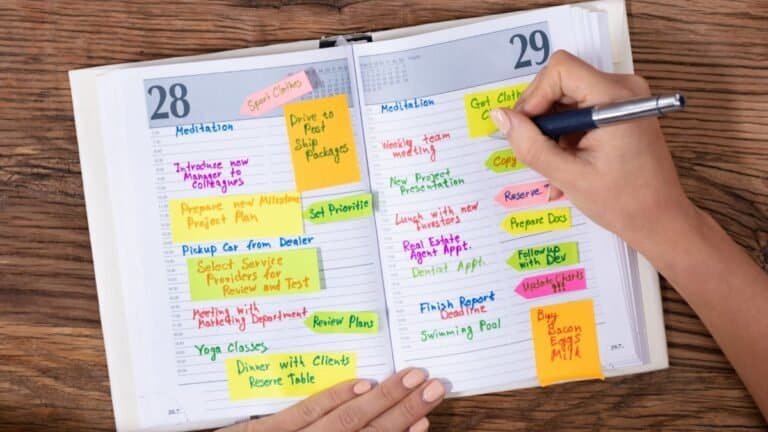
The 1-3-5 Rule: A Simple Framework for Daily Productivity
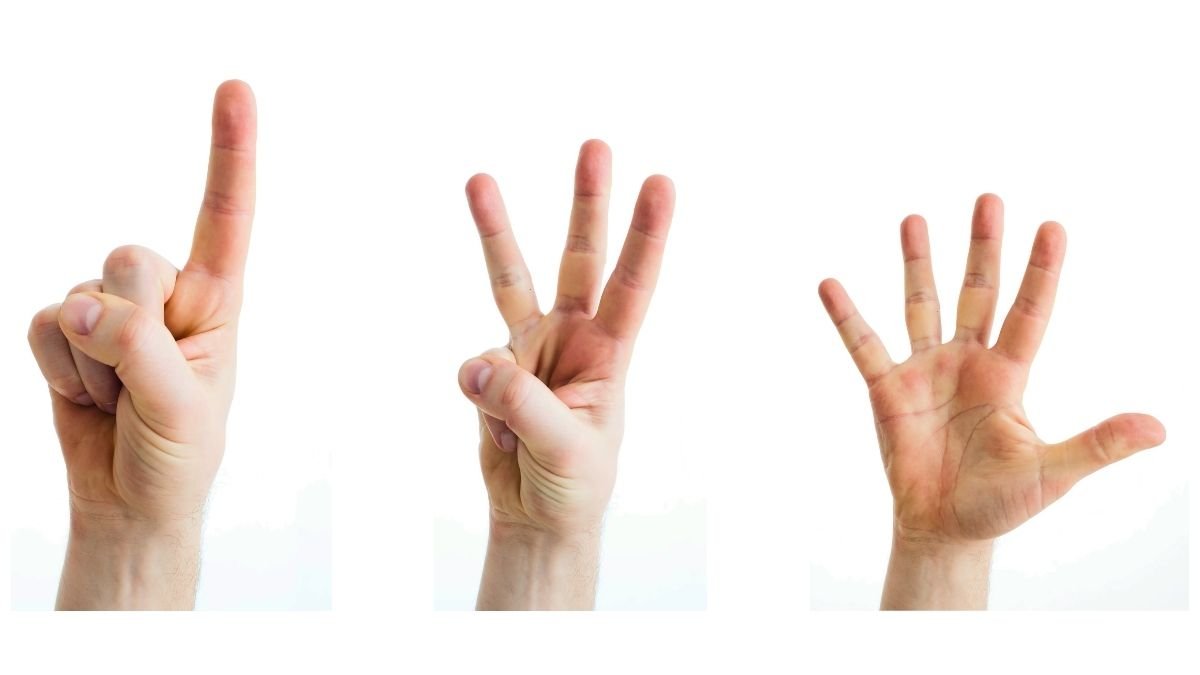
The 1-3-5 rule is one of the simplest and most psychologically sound productivity frameworks available — yet most people have never heard of it. The concept is straightforward: each day, you commit to completing one big task, three medium tasks, and five small tasks. Nine items total. No more endless to-do lists, no more decision paralysis about where to start.
You start Monday with ambition. Twenty-three tasks lined up. By Tuesday afternoon, you’ve ticked off five and added seventeen more. Sound familiar? The longer your to-do list grows, the heavier it feels. Decision fatigue sets in. You don’t know where to start, so you tackle the easiest tasks first — answering emails, organising files, anything to feel productive. Meanwhile, the important work sits untouched.
Here’s the uncomfortable truth: traditional to-do lists don’t force prioritisation. They let everything feel equally urgent, which means nothing actually is. The 1-3-5 rule fixes this.

What Is the 1-3-5 Rule?
The 1-3-5 rule is a task management framework that structures your daily workload into three categories. It was popularised by Alexandra Cavoulacos, author of The New Rules of Work: The Modern Playbook for Navigating Your Career, and gained widespread attention when Betty Liu, Executive Vice Chairman of the New York Stock Exchange, described it as an “amazing productivity booster” she uses every single day.
1 Big Task: Your most important, impactful work for the day. This is the task that, if completed, makes the entire day feel successful. It requires significant mental energy and time — think writing a crucial report, finalising a project proposal, or having that difficult conversation you’ve been avoiding. This is your Everest: challenging, possibly intimidating, but completing it creates real progress towards your goals.
3 Medium Tasks: Important work that keeps projects moving forward but doesn’t require the same intensity as your big task. Client meetings, reviewing documents, planning next week’s priorities, or working through a specific project phase. Substantial enough to matter, manageable enough to complete alongside your big task.
5 Small Tasks: Quick wins that clear your mental plate. Replying to specific emails, updating a spreadsheet, scheduling appointments, or making that phone call you’ve been postponing. Each takes 5–15 minutes. Individually minor, but collectively they prevent the build-up of annoying little jobs that clutter your mind.
Total: nine tasks. No more, no less.
QUICK WIN:
Right now, try the 1-3-5 rule for tomorrow. Write down your one big task — the single thing that would make tomorrow feel successful if completed. Just that one. Don’t move to the medium or small tasks until you’ve committed to the big one. That decision alone is the hardest and most valuable part of the whole system.
Why the 1-3-5 Rule Works: The Psychology
The 1-3-5 rule isn’t just another productivity hack. It aligns with how your brain actually functions — and understanding why helps you use it more effectively.
It Respects Your Working Memory Limits
Research by psychologist George Miller found that our working memory can effectively handle 7±2 items at a time. By capping your daily list at nine tasks, you’re working within your brain’s natural processing capacity. When you try to juggle twenty tasks simultaneously, you’re overwhelming your cognitive resources. The 1-3-5 rule keeps you focused instead of scattered.
It Reduces Decision Fatigue
Every decision depletes your mental energy — even tiny ones like “what should I work on next?” By pre-deciding your nine tasks at the start of the day, you eliminate hundreds of micro-decisions. Similar to how batching emails reduces context-switching, the 1-3-5 rule reduces decision-making overhead throughout the day. You simply work through your list.
It Tackles the Planning Fallacy
We’re consistently terrible at estimating how long tasks take. The planning fallacy describes our tendency to underestimate time requirements — often by 50% or more. Traditional to-do lists enable this delusion. The 1-3-5 rule forces realism. Nine tasks in a day? That’s achievable. Twenty-three tasks? Almost never.
It Creates Genuine Progress Through Small Wins
Research by Teresa Amabile and Steven Kramer at Harvard Business School, published in the Harvard Business Review, found that of all events at work, making progress in meaningful work has the single most prominent positive effect on motivation. The 1-3-5 rule provides multiple opportunities for that progress. You complete your big task — massive win. You tick off medium tasks — solid progress. You clear small tasks — satisfying completion. Each checkmark triggers your brain’s reward system, building momentum throughout the day.

How to Implement the 1-3-5 Rule: Step-by-Step
Step 1: Brain Dump Everything
Start with a complete brain dump. Write down every task you can think of — no filtering, no judgment. Big projects, tiny errands, work obligations, personal commitments. The goal is to get everything out of your head and onto paper or screen. Set a timer for five minutes and write continuously. Aim for 15–20 items minimum.
Step 2: Size Your Tasks Accurately
Review your list and categorise each item based on time and mental energy required:
- Big tasks typically take 2–4 hours of focused work. Cognitively demanding and high-impact.
- Medium tasks take 30–90 minutes. Important but less draining.
- Small tasks take 5–15 minutes. Quick wins that clear mental clutter.
The crucial point: be honest about task size. Many people underestimate, turning what should be a big task into a medium one, then wonder why their schedule falls apart. When in doubt, size up.
Step 3: Select Your Daily Nine
Choose your 1-3-5 for tomorrow (or today if you’re doing this in the morning).
Choose your one big task by asking: “Which task, if completed, would make tomorrow feel successful?” This should directly advance your most important project or goal.
Select three medium tasks that keep momentum on active projects. Where possible, choose tasks from the same project to reduce context-switching.
Pick five small tasks that need doing but don’t require heavy thinking — your between-big-work tasks or energy slump tasks.
QUICK WIN:
Spend 10 minutes this evening creating tomorrow’s 1-3-5 list. Write it on a Post-it or index card and put it somewhere visible. When you wake tomorrow, your first decision is already made — you know exactly what to start with. This single habit removes the morning drift that kills most people’s productive time before 9am.
Step 4: Schedule Strategically
Don’t just list your nine tasks — schedule them based on your energy rhythms. Most people experience peak cognitive function mid-morning, so schedule your big task when you’re sharpest — usually first thing, before email or meetings can fragment your attention. Building on principles of deep work, protect your peak hours for big tasks and relegate shallow work to low-energy periods.
Use medium tasks after completing your big task, when you still have momentum but the peak has passed. Save small tasks for natural energy slumps — post-lunch or late afternoon — or use them as transitions between bigger work.
Step 5: Focus and Execute
Focus on one task at a time. Not two. Not “multitasking.” One. Complete it. Move to the next. When something urgent appears (and it will), ask: “Is this genuinely more important than my big task?” Usually, it isn’t. Capture it for tomorrow’s list. The 1-3-5 rule is flexible — it’s not a rigid prison — but protecting your big task time is what makes the whole system work.

Common 1-3-5 Rule Mistakes (And How to Avoid Them)
Misjudging Task Sizes
You label a task “medium” when it’s actually “big.” By 11am, you’ve spent three hours on one “medium” task and your entire schedule collapses. Fix: when unsure, size up. Better to finish a “big” task quickly and feel accomplished than struggle with an under-sized task and feel defeated.
Choosing Unrelated Tasks
Your three medium tasks are from three completely different projects. Each requires a different mental context, and switching between them creates friction. Fix: cluster related tasks where possible. Three medium tasks on the same project reduces context-switching fatigue significantly.
Ignoring Energy Rhythms
You schedule your big task for 3pm when you’re already mentally tired. It takes twice as long and feels frustrating. Fix: protect your biological prime time for big tasks. Schedule medium and small tasks for lower-energy periods. Your energy pattern is fixed; your schedule isn’t.
Being Too Rigid
An emergency arises and, instead of adapting, you abandon the system entirely because your plan “failed.” Fix: view your nine tasks as a framework, not a contract. Adjust when life demands it, then return to the structure. One disrupted day doesn’t break the habit.
Adapting the 1-3-5 Rule to Your Life
The framework is flexible. The ratio isn’t sacred — the principle is intentional prioritisation with limited commitments.
- Reactive roles (customer service, urgent requests): consider 1-2-4 or protect 2–3 hours for your structured nine tasks, leaving the rest for reactive work
- Creative work days: use 1-0-3 (one big creative task, zero medium, three admin tasks)
- Low-energy days: try 0-2-5 (skip the big task, maintain momentum without overwhelming yourself)
- Heavy admin days: adapt to 1-1-10 if you genuinely have many quick tasks
Using the 1-3-5 rule alongside other approaches like the 2-minute rule works particularly well — tasks that take less than two minutes don’t even need to make your list, which keeps it cleaner.
QUICK WIN:
Look at tomorrow’s calendar right now. How many hours do you actually have available for focused work — not meetings, not lunch, not commute? That number determines whether you’re looking at a full 1-3-5, or whether a modified 1-2-3 is more realistic. Honest capacity assessment before you build your list prevents the planning fallacy before it starts.
Start Using the 1-3-5 Rule Today
The 1-3-5 rule isn’t magic. It’s simply structure that forces honest prioritisation. For tomorrow, try this: tonight, select one big task, three medium tasks, and five small tasks. Write them down. Not thirty tasks. Just nine.
Tomorrow morning, start with your big task. Before emails, before meetings (if you can help it), before anything else. Complete it. Then move to your medium tasks. Then your small tasks. By tomorrow evening, you’ll have finished nine meaningful tasks instead of half-completing twenty unimportant ones. That’s the difference between busy and productive — and it’s what research on high performers consistently shows separates those who make real progress from those who stay perpetually overwhelmed.
According to research on workplace stress from the American Psychological Association, one of the primary drivers of work-related stress is the feeling of being overwhelmed by an unmanageable workload. The 1-3-5 rule directly addresses this by replacing open-ended overwhelm with a clear, finite, achievable plan.
The goal isn’t a perfect system. The goal is finishing what matters — with enough flexibility to handle reality when it inevitably happens.
RESOURCES:
I only recommend resources that I either use personally or have researched and feel are genuinely helpful for my readers. Resources sometimes contain affiliate links; if you purchase through these, I may earn a small commission at no extra cost to you.
Recommended Reading:
Deep Work: Rules for Focused Success in a Distracted World by Cal Newport — The definitive case for protecting your big task time from shallow work and interruptions. Pairs directly with the 1-3-5 rule’s emphasis on tackling your most important work first. Paperback | Kindle | Audible
Getting Things Done: The Art of Stress-Free Productivity by David Allen — GTD’s brain dump and capture system works extremely well alongside the 1-3-5 rule’s daily selection process. Paperback | Kindle | Audible
The New Rules of Work: The Muse Playbook for Navigating the Modern Workplace by Alexandra Cavoulacos and Kathryn Minshew — From the co-founder of The Muse who created the 1-3-5 rule, a practical guide to building a career you love in the modern workplace. Paperback | Hardback | Kindle | Audible
Related Articles from Marginal Gains:
How to Focus Better at Work — Protect the time you free up using the 1-3-5 rule with deep work strategies that prevent interruption.
How to Batch Emails — Combine with the 1-3-5 rule to eliminate email as a source of constant context-switching.
Why Time Blocking Fails — Understand why scheduling alone isn’t enough — and how the 1-3-5 rule solves the prioritisation gap.
The 2-Minute Rule — Tasks under two minutes don’t belong on your 1-3-5 list — handle them immediately instead.
Daily Habits of Successful People — How intentional task prioritisation fits into the broader pattern of habits that drive sustained high performance.
I'm Simon Shaw, a Chartered Occupational Psychologist with over 20 years of experience in workplace psychology, learning and development, coaching, and teaching. I write about applying psychological research to everyday challenges - from habits and productivity to memory and mental performance. The articles on this blog draw from established research in psychology and behavioural science, taking a marginal gains approach to help you make small, evidence-based changes that compound over time, allowing you to make meaningful progress in the areas you care about most.