
How to Improve Mental Performance: 10 Science-Backed Strategies

Introduction
You’ve probably heard that the average person uses only 10% of their brain. Sorry to pull the rug so early, but this has been debunked by modern neuroscience. However, fear not — there’s still a huge amount you can do to improve mental performance on a daily basis. This comprehensive guide explores cutting-edge scientific research, time-tested strategies and practical tools to help you improve mental performance for better clarity, focus, memory, and overall cognitive function.
What is Mental Performance, anyway?
Mental performance isn’t just about being “smart” or having a high IQ. It’s much more nuanced. Think of it like your brain’s overall fitness level across different areas, including attention, memory, processing speed and demanding tasks such as weighing up the pros and cons of a complex decision. To improve mental performance, you don’t need to overhaul your life — small, consistent changes compound into significant gains over time.
Improving mental performance is really about reducing the gap between your potential and your daily functioning. We all have off days — that’s just being human. But you can improve mental performance on any given day by incorporating the brain-friendly habits outlined below into your daily routine. It’s like installing a software update to ensure you’re using your brain’s hardware to its fullest potential. If you’re not sure where to start, try our Mental Performance Checklist. It takes 5 minutes and gives you customised guidance about your first steps to improve your mental performance.
Note: The scientific terms and brain mechanisms in cognitive enhancement research can make your head spin. You don’t need a PhD in neuroscience, but if you’re interested, I’ve defined some commonly used terms at the end of this article (click here). Otherwise, dive right into the first strategy to improve mental performance…
1. Attention Management
One of the greatest threats to mental performance is systematic fragmentation of attention. After an interruption, it takes an average of 23 minutes to return to full focus on your original task. Checking one email doesn’t cost 30 seconds — it costs nearly half an hour of peak performance. If you want to improve mental performance, protecting your attention is the single highest-leverage intervention available.
What we call “multitasking” is actually rapid task-switching, and it’s devastatingly inefficient. Every attention shift requires your brain to reorient, reload context, and overcome switching costs. Studies show regular multitaskers perform worse at filtering irrelevant information than those who focus on one thing at a time. Techniques including mnemonic devices are a practical way to reduce cognitive load — encoding information more efficiently frees up mental resources for higher-order thinking.
Your smartphone is probably the biggest drain. Even having it visible — face down, silent — reduces available cognitive capacity as your brain works to resist checking it. I now charge my phone in a different room during focused work. The freedom of not having that constant pull is worth any minor inconvenience.
Rather than fighting your attention’s natural rhythms, structure your day around them. Most people have peak windows (often late morning and late afternoon). Protect these times for demanding cognitive work. Use tools like Freedom, Cold Turkey, or LeechBlock to block distracting sites during focus sessions.
QUICK WIN: Put your phone in another room (not just face down) during your next focus session. Even its mere presence reduces cognitive capacity. Try this once and notice the difference in your concentration.
For strategies on rebuilding sustained attention capacity and reducing digital fragmentation, see How to Focus Better at Work: The Complete Deep Work Guide, How to Do a Digital Detox in 2026, and The 50/10 Focus Method: Why Longer Focus Beats Pomodoro.
For managing browser tab overload and keeping your digital workspace clean, see Tab Overload? How to Finally Tame Your Browser Tab Chaos.
2. Workflow Optimisation
Your daily systems and workflows dramatically impact mental performance. Poor workflow design creates unnecessary cognitive load — the mental effort required to complete tasks. Even small improvements in how you structure your workday compound into substantial gains in how you think, focus and perform. For anyone looking to improve mental performance at work, workflow optimisation is often the most underestimated lever. Reducing cognitive load is one of the most underrated performance levers available. Alongside workflow optimisation, another useful strategy is mental clutter clearing — systematically limiting what your brain is actively tracking at any one time.
Time blocking — allocating specific time slots for specific tasks — can be transformative when done properly. The key is protecting these blocks religiously and matching task difficulty to your energy levels. Schedule demanding cognitive work during your peak performance windows and administrative tasks during lower-energy periods.
Batching similar tasks together reduces the mental overhead of constant context switching. I now batch all my emails into two 30-minute sessions daily rather than checking constantly throughout the day. The mental clarity from not having “check email” constantly lurking in the background is remarkable.
The 1-3-5 Rule provides a simple daily planning framework: tackle 1 big task, 3 medium tasks, and 5 small tasks each day. This prevents overcommitting while ensuring you make progress on what matters most. The 2-Minute Rule complements this beautifully: if something takes less than two minutes, do it immediately rather than adding it to your task list.
Friction logging — systematically identifying and removing obstacles in your workflows — can reveal surprising productivity drains. I discovered I was losing 15 minutes daily just searching for frequently-used files. Moving them to my desktop recovered over an hour weekly.
QUICK WIN: Choose one repeated task this week and batch it. Instead of checking email constantly, try two 30-minute batches. Track how much mental energy you reclaim from not having it constantly pulling your attention.
For complete workflow systems and productivity frameworks, see Why Time Blocking Fails (And How to Fix It for Good), How to Batch Emails: Reclaim an Hour Every Day (2026), The 1-3-5 Rule: A Simple Framework for Daily Productivity, The 2-Minute Rule: Eliminate Procrastination Instantly, and Friction Logging: Find and Fix Productivity Roadblocks.
For managing your mental energy across the working day, see How to Maintain Mental Energy: Stop the 3pm Crash.
3. Sleep and Memory
Research shows that even one night of poor sleep can impair cognitive function by up to 40%. Your reaction time, attention, and decision-making abilities all take a significant hit. If you’re serious about how to improve mental performance, sleep is non-negotiable — it’s the foundation everything else is built on.
When you sleep, your brain isn’t resting — it’s actively repairing itself and processing information. During deep sleep, your brain transfers important information from temporary to permanent storage and washes away waste products like amyloid plaque linked to Alzheimer’s. During REM sleep, your brain makes new connections for creative problem-solving and emotional regulation.
You cycle through these sleep stages 4–6 times per night, with each cycle lasting about 90 minutes. Most adults need 7–9 hours for peak mental performance. Cutting sleep short leaves you mentally incomplete the next day — tired people struggle with focus and regulating emotions.
The bottom line? Your brain literally cannot function at its best without proper sleep. People who prioritise sleep consistently outperform their peers, retain information better, and show greater creativity. I’m certainly much more effective at work when I honour my sleep needs.
QUICK WIN: Establish a consistent sleep schedule — go to bed and wake up at the same time every day, even weekends. Your brain loves predictability, and this single habit forms the foundation of good sleep hygiene.
For comprehensive guidance on sleep environment optimisation and evidence-based pre-sleep routines, see How to Improve Sleep Quality: 7 Science-Backed Changes for Sharper Thinking.
For the cognitive science of how sleep affects memory consolidation and learning, see Sleep and Cognitive Function: The Complete Guide.
4. Stress and Mental Performance
Most people believe stress is the enemy of clear thinking. But what if this conventional wisdom is wrong? Understanding the stress-performance relationship is one of the most counterintuitive aspects of how to improve mental performance — because managed correctly, stress can actually enhance your cognitive abilities.
The relationship between stress and performance follows the Yerkes-Dodson Law — an inverted U-curve. Too little stress leads to boredom and poor performance. Too much causes anxiety and cognitive breakdown. But in the middle lies a sweet spot where moderate stress enhances your mental abilities.
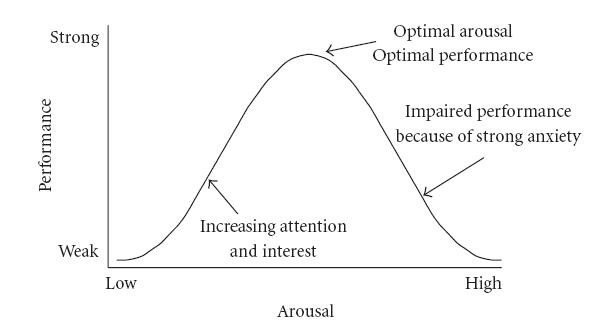
The crucial distinction is between “eustress” (good stress — short-term, manageable challenges) and “distress” (bad stress — chronic, overwhelming pressure). Short-term stress releases hormones that increase alertness, strengthen memory formation, and boost creativity. This is why some people produce their best work under deadlines.
However, chronic stress damages brain structures. The hippocampus shrinks, prefrontal cortex connections weaken, and everyday tasks become harder — creating a vicious cycle. Warning signs include persistent fatigue, difficulty concentrating, irritability, and feeling overwhelmed by manageable tasks.
The goal isn’t to eliminate stress but to find your optimal level. Stress isn’t your enemy — it’s a powerful tool that can enhance thinking when properly managed.
QUICK WIN: Practice the 4-7-8 breathing technique when stressed: inhale for 4 counts, hold for 7, exhale for 8. Repeat 3–4 times. This immediately shifts your nervous system from fight-or-flight to calm, and you can do it anywhere.
For practical stress management techniques and finding your optimal stress zone, see Stress Management Techniques for Mental Performance: A Psychologist’s Practical Guide.
For recovery from chronic overwhelm, see How to Recover From Mental Burnout: A Psychologist’s Guide.
5. Meditation for Focus
I’ll be honest — I was sceptical about meditation for years. Then I started actually reading the research. The neuroscience is remarkably robust, showing measurable brain changes after just weeks of practice.
Meditation isn’t just relaxation — it’s literally training your brain’s attention systems. Research from Harvard Medical School found that eight weeks of mindfulness meditation increased grey matter density in brain regions for memory, self-awareness, empathy, and stress regulation. The hippocampus grew larger while the amygdala (your fear centre) shrank.
Research shows meditation improves sustained attention (focusing on tasks over time), executive attention (directing focus and resisting distractions), and working memory. Just 10–15 minutes daily for two weeks showed significant attention span improvements.
One of the most practical benefits is improved emotional regulation. Meditation strengthens connections between the prefrontal cortex (rational thought) and amygdala (emotional reactions), giving you more control. There’s a space between stimulus and response where you can choose how to react rather than responding automatically.
The key is consistency over duration. Daily practice of 10–15 minutes beats occasional longer sessions. Your brain responds to regular training, not sporadic marathons. I meditate for 15 minutes every morning — not because I always enjoy it, but because I’ve noticed the cumulative effects on my focus, patience, and stress levels.
QUICK WIN: Sit quietly for 5 minutes tomorrow morning and simply notice your breath. When your mind wanders (it will), gently return attention to breathing. That’s it. Do this daily for a week before worrying about apps or techniques.
For step-by-step meditation protocols and troubleshooting common issues, see Mindfulness for Focus: Stop Your Mind Racing.
For managing racing thoughts specifically, see How to Stop Overthinking: 7 Proven Techniques.
6. Social Connection and Brain Health
As a “raging introvert,” this is hard for me, and I still have work to do here. However, the science is clear: your brain is fundamentally social. When you engage in meaningful interactions, you’re giving your brain one of the most comprehensive workouts available.
The Framingham Heart Study found that individuals with strong social connections had better cognitive function as they aged and slower rates of cognitive decline. University of Michigan research showed just 10 minutes of conversation improved executive function — the same boost you’d get from a crossword puzzle, but infinitely more enjoyable!
During conversation, you’re simultaneously reading facial expressions, interpreting tone, predicting responses, formulating replies, and managing emotions. It’s cross-training for your brain, working memory, attention, language processing, and emotional regulation all at once.
Quality trumps quantity. Having a few close, meaningful relationships appears more beneficial than hundreds of superficial connections. I’ve noticed that after proper conversations with family or friends, I return to work with fresh perspectives and clearer thinking. Those “interruptions” aren’t actually interruptions — they’re cognitive refresh buttons.
QUICK WIN: Schedule one 15-minute coffee chat with a friend or colleague this week. Put it in your calendar like any other meeting. Face-to-face conversation provides cognitive benefits that texting or email can’t match.
For strategies on meaningful conversation and quality relationships, see Social Connection and Brain Health: Why Your Brain Needs People.
For navigating workplace boundaries while maintaining connection, see How to Say No at Work Without Burning Bridges.
7. Workspace Optimisation
I used to believe mental performance was all about what happened inside my head. Then I started paying attention to how drastically my thinking changed based on where I was working. Your environment actively shapes your cognitive performance.
Temperature matters: cognitive performance peaks around 21–22°C (70–72°F). Lighting is crucial — bright light during the day keeps you alert; dim, warm light in the evening prepares you for sleep. Position your desk near a window if possible; workers near windows report better concentration, mood, and sleep than those in windowless offices.
For noise, it depends on the task. Silence works best for focused work requiring sustained attention. Moderate ambient noise (café-level) enhances creativity. Intelligible words (conversations, lyrics) compete with your brain’s language processing and hinder verbal tasks.
Air quality rarely gets attention but has substantial impact. Doubling ventilation rates improved cognitive performance by 100% on some measures. Open windows when possible, use plants (spider plants, snake plants), or consider an air purifier.
Finally, clutter competes for attention. Physical clutter reduces focus and increases stress. Every object in your workspace should serve a purpose or bring genuine joy. Everything else is cognitive noise.
QUICK WIN: Spend 5 minutes right now clearing your desk of everything except what you need for your current task. A clear physical space creates a clear mental workspace. Do this at the end of each workday.
For complete environmental optimisation including temperature protocols, lighting strategies by task type, air quality improvements, and ergonomic setup, see Home Office Setup for Productivity: The Psychology Behind Better Focus.
8. Exercise and Brain Health
I used to think exercise was just about looking good or maintaining a healthy heart. Then I saw brain scan comparisons between active and sedentary people of the same age. The difference was shocking. Research shows that even a short walk stimulates increased oxygen flow to the brain, improving academic and work performance. Exercise may be the single most evidence-backed way to improve mental performance — and the most underused.
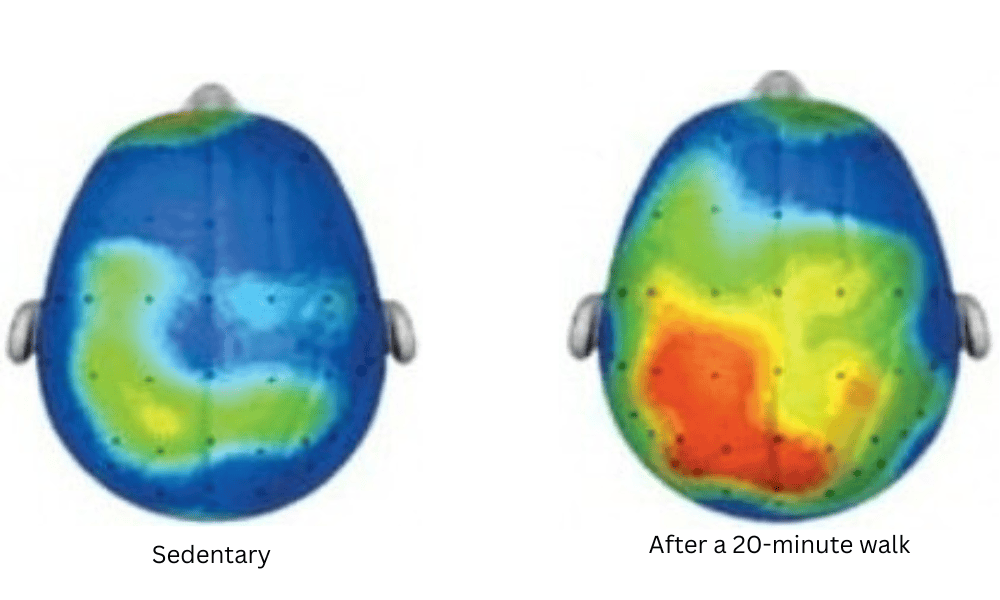
Physical exercise increases blood flow to the brain, promotes neuroplasticity, and boosts Brain-Derived Neurotrophic Factor (BDNF) — a protein that acts like fertiliser for your brain cells. It also triggers dopamine, serotonin, and norepinephrine release, helping with focus, mood, and attention. I’ve experienced this firsthand — on days when I run, my thoughts are clearer and my work flows much better.
Different exercise types affect your brain uniquely. Aerobic exercise (walking, jogging, swimming) benefits the hippocampus and memory. Resistance training improves executive function — planning, organising, completing tasks. HIIT workouts boost cognitive flexibility — your ability to switch between tasks and adapt to new information.
The good news? Just 20–30 minutes of moderate exercise most days shows significant cognitive improvements. Even broken into smaller “exercise snacks” throughout the day, it still counts! The key is consistency rather than intensity.
QUICK WIN: Take a 10-minute walk after lunch. This simple habit improves afternoon focus and energy, breaks up your sitting time, and requires no special equipment or gym membership. Start tomorrow.
For the complete science of how movement makes you smarter — including BDNF mechanisms, optimal exercise timing, and brain-boosting workout protocols — see Best Exercise for Brain Health: Which Types Work Best?.
9. Brain Nutrition
Ever wondered why you keep hitting that afternoon mental crash? Chances are you’re not giving your brain the fuel it needs. Your brain uses about 20% of your body’s energy despite being only 2% of your body weight, so you need to fuel it consistently throughout the day to improve mental performance.
Start with hydration — 60% of the adult body is water, and the brain is closer to 75%. Even mild dehydration (just 1–2% below optimal) prevents your brain cells from working properly. The colour of your urine is a guide: the lighter, the better. Aim for 6–8 glasses daily, or 35ml per kilogram of body weight.
Research into “blue zones” — areas where people live exceptionally long, healthy lives — reveals that diets rich in fresh vegetables, fish, beans, olive oil and moderate red wine support brain health. The Mediterranean diet in particular improves blood sugar stability, avoiding the rollercoaster spike and crash. After switching from bread and pasta to olive oil, fish, nuts, and fresh vegetables, my mental energy is much more stable throughout the day.
Conversely, avoid foods that tank your mental performance. Sugary foods give you a quick spike but guarantee a crash 60–90 minutes later. Trans-fats are associated with faster cognitive decline and poorer memory function.
When You Eat Matters Too
As well as what to eat, consider when to eat. I stumbled into intermittent fasting through Dave Asprey’s Bulletproof Coffee (butter and MCT oil blended into black coffee — surprisingly palatable!). It’s designed to switch your brain into burning fat rather than glucose. Replacing breakfast with this kept me mentally sharp and energised through the workday with no hunger pangs.
Humans are adapted to go without food for hours or days. When food is scarce, we convert fat reserves into ketones — the brain’s preferred fuel source during fasting. Experts like Harvard’s David Sinclair, Stanford’s Andrew Huberman, and biomedical scientist Rhonda Patrick agree intermittent fasting supports brain health by triggering hormesis (beneficial stress), activating autophagy (cellular recycling), reducing inflammation, and increasing BDNF production.
Popular protocols include time-restricted eating (16-hour fast, 8-hour eating window), periodic fasting (5:2 diet — normal eating five days, 500–600 calories two days), or alternate day fasting. While more research is needed, regular fasting windows show promise for improving brain health.
Intermittent fasting may not suit everyone. Start slowly and consult your doctor if in doubt.
QUICK WIN: Drink a glass of water first thing in the morning and keep a water bottle at your desk. Proper hydration is the easiest, fastest way to improve mental performance — most people are chronically under-hydrated without realising it.
For comprehensive hydration science and practical protocols, see Dehydration and Brain Function: Why Your Brain Needs Water.
10. Brain Training
The billion-dollar brain training industry makes bold claims, but research tells a more nuanced story. You’ll improve at what you practice, but those gains may not transfer to other mental tasks. Think of it like learning piano — you’ll get better at piano, but don’t expect it to improve your maths skills.
Instead of chasing general brain enhancement, focus on targeted improvements. Dual N-Back training has strong research support for working memory (your ability to juggle information mentally). Apps like memoryOS teach proven memory techniques including the method of loci and spaced repetition — users report 70% increased recall after their first session. For processing speed in older adults, BrainHQ exercises from the ACTIVE trial showed benefits lasting a decade.
Brain training apps aside, one of the most effective ways to sharpen mental performance is to learn new things deliberately — the evidence-based strategies in our guide on how to learn faster show you exactly how to make that process as efficient as possible. Similarly, learning new skills that genuinely interest you — a musical instrument, language, craft, or hobby. Intrinsic motivation ensures consistency, and you gain a useful ability alongside cognitive benefits. Acquiring new skills is one of the most effective ways to maintain cognitive sharpness — our guide on how to learn any skill fast covers the deliberate practice method that makes skill acquisition significantly more efficient.
The bottom line: targeted practice improves specific mental skills, but there’s no magic bullet for overall intelligence. Think about areas you most need to improve and focus on solutions that target those specifically.
QUICK WIN: Choose one skill you’ve always wanted to learn (instrument, language, craft) and commit to 15 minutes of practice three times weekly. This provides excellent cognitive training while building a meaningful ability.
For reviews of evidence-based brain training apps and tools, see our content on focus apps and productivity tools coming soon.
Conclusion: Your Mental Performance Action Plan
We’ve covered a lot — from attention management and workflow optimisation to sleep, stress, meditation, social connection, workspace design, exercise, nutrition, and brain training. If you want to improve mental performance, the good news is you don’t need to implement everything at once. Small improvements compound over time into significant gains in how you think, focus, and perform.
Mental performance isn’t about perfection. It’s about progress. Even small improvements compound over time into significant gains in how you think, focus, and perform.
Here’s my suggested approach:
Start with foundations. Sleep and hydration are non-negotiable — they’re the bedrock upon which everything else is built. If you’re chronically sleep-deprived or poorly hydrated, no productivity hacks will compensate. Get these right first.
Pick one or two strategies that resonate most. Maybe it’s protecting your attention, optimising your workflow, or finally putting your phone in another room during focused work. Choose changes that feel achievable and align with your biggest pain points.
Build gradually. Add new habits slowly, giving each time to become automatic. I’ve been optimising my mental performance for years and still discover new approaches. This is a marathon, not a sprint.
Track what works for you. Everyone’s brain is different. Pay attention to your own patterns. Notice when you feel sharpest, what drains versus energises you, which environments help you focus. Then double down on what works.
Be kind to yourself. You’ll have off days. You’ll slip into old habits. You’ll get interrupted mid-focus session. That’s life. The goal isn’t perfection — it’s a general upward trajectory over time.
Remember: your brain is remarkably adaptable. Every time you improve mental performance through better attention habits, protected sleep, regular movement, or refined workflows, you’re literally rewiring your brain for better function.
These strategies aren’t theoretical — they’re practical, science-backed approaches that can transform how you think, work, and live. Here’s to thinking clearer, focusing better, and performing at your best in 2026 and beyond.
So what’s your first step? Pick one thing from this guide — just one — and commit to trying it for a week. See how it feels. Notice what changes. Then build from there.
Assess Your Mental Performance
If you’re not sure where to start, try our Mental Performance Checklist. It takes 5 minutes to complete and gives you customised guidance about your mental performance strengths, areas to prioritise for development and links to helpful resources.
Common Terms in Mental Performance
Neuroplasticity — your brain’s ability to rewire itself based on experience. Research shows consistent mental training can create new neural pathways in as little as 8 weeks.
Cognitive reserve — your brain’s buffer against ageing and disease. Mental stimulation, social activity, and healthy lifestyle boost this reserve, potentially delaying Alzheimer’s symptoms by up to five years.
Neurotransmitters — chemical messengers between brain cells. Key ones include dopamine (focus, motivation), serotonin (mood, clear thinking), and acetylcholine (attention, memory).
BDNF (Brain-Derived Neurotrophic Factor) — a protein that acts like fertiliser for brain cells, helping neurons grow and create new connections. Exercise and fasting increase BDNF production.
Working memory — your brain’s mental workspace for temporarily holding and manipulating information. Essential for following instructions, mental maths, and complex problem-solving.
Executive function — higher-level thinking skills including planning, organisation, decision-making, impulse control, and task completion. Managed primarily by the prefrontal cortex.
Autophagy — your brain’s cellular recycling process that breaks down and removes damaged components. Fasting and exercise activate autophagy, like giving your brain a deep clean.
Ketones — molecules produced when your body burns fat for fuel. During fasting, ketones become the brain’s preferred energy source and may enhance mental clarity.
Key brain regions:
Prefrontal cortex — your brain’s “CEO” behind your forehead, handling planning, decision-making, problem-solving, and impulse control.
Hippocampus — seahorse-shaped structure acting as your brain’s filing cabinet, storing new memories and connecting new learning to existing knowledge.
Amygdala — your brain’s alarm system, processing emotions like fear and anxiety. Meditation can shrink the amygdala, reducing stress reactivity.
Anterior cingulate cortex — acts like a mental security guard, deciding what information gets your attention and what gets filtered out.
When these brain regions communicate effectively through neural pathways, your mental performance soars.
I'm Simon Shaw, a Chartered Occupational Psychologist with over 20 years of experience in workplace psychology, learning and development, coaching, and teaching. I write about applying psychological research to everyday challenges - from habits and productivity to memory and mental performance. The articles on this blog draw from established research in psychology and behavioural science, taking a marginal gains approach to help you make small, evidence-based changes that compound over time, allowing you to make meaningful progress in the areas you care about most.