
How to Do a Digital Detox in 2026

If you’re wondering how to do a digital detox that actually works, you’ve come to the right place. You pick up your phone to check the time. Twenty minutes later, you’re still scrolling. Sound familiar? Research shows that 61% of adults admit they’re addicted to their digital devices, and the average person checks their phone 144 times daily.
A digital detox offers a practical solution — but not the kind that means throwing your phone in a drawer for a month or reverting to a flip phone. Instead, it’s about creating intentional boundaries with technology so you can reclaim your time, attention and wellbeing.
This guide walks you through exactly how to do a digital detox that actually sticks, based on psychological research and proven strategies from people who’ve successfully reset their relationship with screens.
What Is a Digital Detox?
A digital detox is a deliberate period when you reduce or eliminate your use of digital devices like smartphones, computers and tablets. The goal isn’t to reject technology entirely but to establish healthier patterns that support rather than undermine your wellbeing.
Think of it as pressing pause on the constant connectivity that defines modern life. During a detox, you might step away from social media, turn off non-essential notifications, set phone-free hours or create screen-free zones in your home. What matters is creating space between you and your devices so you can engage more fully with the physical world around you.
Why Your Brain Needs a Digital Detox
Every time you check your phone, open an app or respond to a notification, your brain releases dopamine. This neurotransmitter creates feelings of pleasure and satisfaction — the same chemical response triggered by addictive substances. Your brain quickly becomes conditioned to seek these small rewards, creating a cycle that’s genuinely difficult to break.
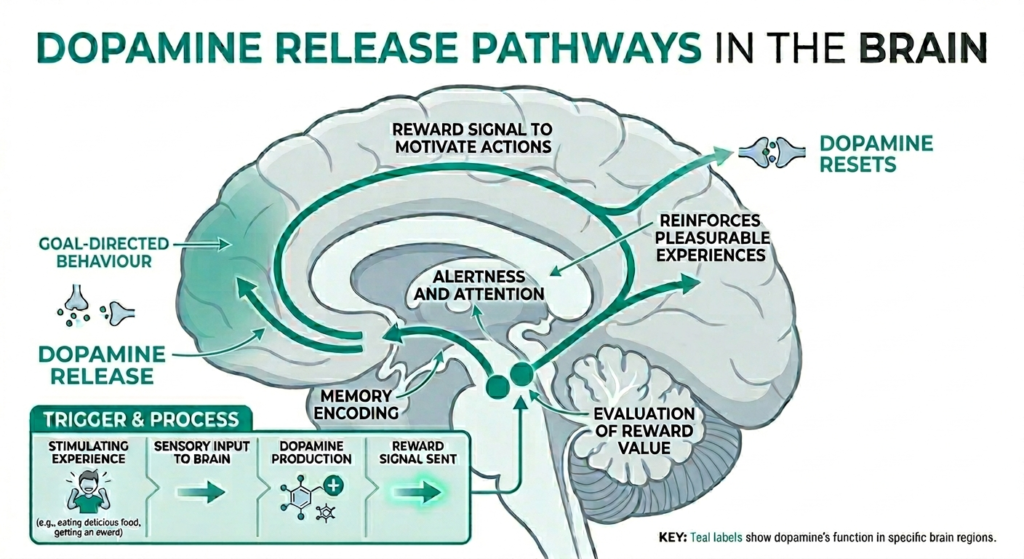
Research from Georgetown University found that digital detoxes can improve mental health markers comparable to established treatments like cognitive behavioural therapy. Participants who reduced their screen time by half reported meaningfully lower anxiety and stress levels, alongside better life satisfaction. Crucially, 91% of all participants improved on at least one major outcome — even those who didn’t fully meet their reduction goals.
Beyond mental health, excessive screen time affects your cognitive function. Studies show our attention spans have dropped from 2.5 minutes in 2004 to just 47 seconds in 2024 — a decline that correlates directly with smartphone adoption and social media use. When you’re constantly switching between notifications, emails and apps, your brain operates in a perpetual state of alert, making deep focus nearly impossible.
The physical effects are equally concerning. The blue light from screens disrupts your circadian rhythm by suppressing melatonin production, making it harder to fall asleep and stay asleep. The Georgetown study found that participants slept an average of 20 minutes more per night during their detox.
QUICK WIN:
Check your screen time right now. On iPhone: Settings → Screen Time. On Android: Settings → Digital Wellbeing. Note your daily average for the past week. That number is your baseline — and the first step to knowing where a digital detox will help most.
Signs You Need a Digital Detox
Not everyone needs the same level of intervention, but certain patterns suggest your technology use has become problematic. You reach for your phone within minutes of waking, before you’ve even got out of bed. Your last action before sleep is checking your device. During conversations, you find yourself half-listening whilst glancing at your screen. You feel anxious or uncomfortable when you don’t have your phone nearby.
Physical symptoms matter too: eye strain, headaches, neck or back pain, or poor sleep quality that traces back to evening screen use. Perhaps most tellingly, you’ve noticed your productivity declining despite spending more time “working” on screens. When technology starts diminishing rather than enhancing your quality of life, it’s time to learn how to do a digital detox properly.
How to Do a Digital Detox: A 10-Step Guide
Step 1: Assess Your Current Usage
Before you can change your habits, you need to understand them. Spend a few days tracking exactly how much time you spend on devices and which activities dominate that time. Your smartphone likely has built-in screen time tracking — use it. But go beyond the numbers. Keep a brief log noting when you reach for your phone and what prompts it. This self-awareness forms the foundation for meaningful change.
Step 2: Set Clear, Specific Goals
Vague intentions like “use my phone less” rarely succeed. Instead, create specific, measurable goals that address your particular pain points. If evening screen time disrupts your sleep: “No screens for one hour before bed, starting at 10pm.” If social media leaves you feeling inadequate: “Limit Instagram to 20 minutes daily, only between 1-2pm.” Start with achievable targets rather than dramatic overhauls — reducing screen time by 30 minutes daily is more sustainable than attempting a complete blackout.
Step 3: Manage Your Notifications
Notifications are the primary mechanism keeping you tethered to your device. Each ping, buzz or banner pulls your attention away and fragments your focus. Conduct a notification audit — go through every app and ask: “Do I genuinely need immediate alerts from this?” For most apps, the answer is no.
Disable push notifications for social media apps entirely. Turn off email notifications too — checking email at designated times is far more productive than responding to every incoming message instantly. Keep notifications only for truly time-sensitive communications: messages from close friends and family, calendar reminders, or work-critical alerts. If you struggle to focus because of laptop clutter too, see our guide to browser tab management.
QUICK WIN:
Open your phone settings right now and turn off all notifications for your three most-used social media apps. This takes under two minutes and is the single highest-impact step in how to do a digital detox — you’ll notice the difference within hours.
Step 4: Create Physical Boundaries
Out of sight often means out of mind. Charge your phone outside your bedroom — this single change addresses multiple problems: it eliminates the temptation to scroll before sleep, prevents sleep disruption from overnight notifications, and removes the automatic morning phone grab. Use an actual alarm clock instead.
Establish screen-free zones in your home: the dining table, your bedroom, and bathrooms where mindless scrolling often occurs. During work or study sessions, place your phone in another room. Research shows that simply having your phone visible on your desk — even face-down and silent — reduces cognitive capacity. This “iPhone effect” occurs because part of your brain is working to resist the urge to check.
Step 5: Replace Screen Time With Meaningful Activities
The hardest part of a digital detox is the void it creates. Make a list of alternatives before you start — both quick options for short gaps (deep breathing, stretching, looking out a window) and longer activities for substantial screen-free periods (reading, exercise, cooking, crafting, playing music, spending time outdoors). Research consistently shows that active engagement contributes more to wellbeing than passive consumption. A 30-minute walk will leave you feeling better than 30 minutes of scrolling, even though scrolling feels easier in the moment.
Step 6: Redesign Your Digital Environment
Small changes to how your devices look and function can significantly reduce their addictive pull. Move social media apps off your main screen into folders. Place only essential tools where they’re immediately visible — this extra friction reduces impulsive opening.
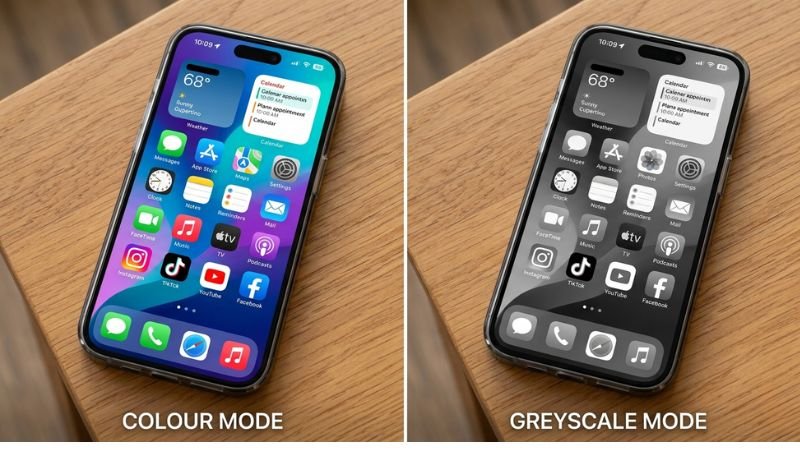
Enable grayscale mode on your phone. The vibrant colours of app icons are deliberately designed to trigger dopamine release — removing colour makes your phone less visually compelling. On iPhone: Settings → Accessibility → Display. On Android: Settings → Accessibility → Visibility enhancements.
Delete apps that consistently leave you feeling worse. Log out of social media accounts on your phone — having to enter your password creates a moment of conscious decision rather than automatic behaviour.
Step 7: Use Digital Tools Strategically
It might seem contradictory to use apps for a digital detox, but the right tools provide helpful structure. Screen time apps let you set daily limits for specific apps — when you hit your limit, it blocks or requires you to consciously override it. Freedom, AppBlock and Forest are popular options, though built-in iPhone and Android features work well for most people. Website blockers like Cold Turkey or StayFocused can restrict access to distracting sites during productive hours.
Step 8: Implement a Gradual Reduction
Complete technology blackouts work for some people, but a gradual approach proves more sustainable for most. Start with just 15 minutes of phone-free time daily. The next day, extend it to 30 minutes. Work up to a screen-free hour, then two hours, then perhaps a half-day each week. Alternatively, designate specific phone-free periods that make sense for your life — no screens during meals, after 9pm, or during your morning routine. These bounded chunks are often easier to maintain than vague intentions to “use your phone less.”
Step 9: Communicate Your Detox
Tell the people in your life about your digital detox plans. This manages expectations about your responsiveness, creates accountability and might inspire others to join you. Let friends and family know they can reach you by phone call if something urgent arises, but you won’t be immediately responding to messages. Better yet, find a detox partner — having someone committed to the same goals provides mutual support and makes the process less isolating.
Step 10: Reflect and Adjust
After your initial detox period, take time to evaluate. What improvements did you notice? Better sleep, reduced anxiety, more productivity, stronger relationships? Use these insights to design your ongoing relationship with technology. A digital detox isn’t typically a one-time event but the start of sustained behaviour change. Be prepared for some backsliding — when you notice yourself slipping back into compulsive phone use, simply recommit to your boundaries. There’s no failure here, only ongoing practice.
QUICK WIN:
Tonight, charge your phone in a different room rather than your bedroom. If you use it as an alarm, buy a basic alarm clock (under £10). This one change — the most cited recommendation in how to do a digital detox — will improve your sleep within days and remove the automatic morning scroll before you’re even fully awake.
Different Approaches to a Digital Detox
Your detox strategy should match your needs, personality and circumstances.
The Radical Detox involves complete disconnection for a set period — locking your phone away for a weekend, going on a technology-free holiday, or switching to a basic phone for a week. Dramatic reset, but requires significant planning.
The Gradual Reduction focuses on slowly decreasing screen time rather than eliminating it — perhaps reducing by 10% each week until you reach a sustainable level. Less overwhelming and allows habits to shift incrementally.
The Scheduled Approach confines technology use to specific windows — perhaps 30 minutes of social media at lunch and 30 minutes in the evening, off-limits otherwise.
The Selective Detox targets specific problematic areas whilst leaving others unchanged. If Instagram makes you miserable but you find value in reading articles online, delete Instagram without restricting other use.
The Mini-Detox establishes daily tech-free hours — no screens after 8pm or before 9am, or during your commute. These bounded periods create regular respite without requiring wholesale lifestyle changes.
Overcoming Common Digital Detox Challenges
FOMO strikes many people during a detox. Remember that genuinely urgent matters reach you through phone calls. Everything else can wait. The world kept turning before instant connectivity.
Boredom is another hurdle. You’ve trained your brain to fill every gap with your phone. This discomfort is actually valuable — your brain relearning how to be present with your own thoughts. Embrace these moments rather than immediately filling them.
Work pressure creates genuine complications. If your job requires digital availability, establish clear boundaries rather than a complete detox. Perhaps you’re available during office hours but unreachable in the evenings. Pair this with email batching to reduce the constant pull of your inbox.
–Withdrawal symptoms are real. You might feel anxious, restless or irritable when you first reduce screen time — your brain recalibrating its dopamine system. These feelings typically peak in the first few days, then diminish. Mindfulness practices, physical exercise and staying busy with alternative activities help manage the discomfort.
Making Your Digital Detox Sustainable
The real challenge isn’t completing a digital detox — it’s maintaining healthier habits afterwards. Build new routines that don’t involve screens. If you used to scroll whilst drinking your morning coffee, replace that with reading a physical book or simply sitting quietly. Habit research shows that maintaining the same time and context whilst swapping the behaviour is highly effective for lasting change.
Track your progress, but don’t obsess over it. Checking your screen time stats once a week provides useful feedback without becoming another source of stress. Every few months, audit your apps, notification settings and digital boundaries to ensure they still serve your goals.
Remember your why. Keep a note of the benefits you experienced — better sleep, reduced anxiety, more present relationships, whatever mattered most. When temptation strikes, reviewing these benefits reinforces your motivation to maintain your boundaries.
The Bigger Picture: Digital Minimalism
A digital detox works best as part of a broader philosophy about technology use. Digital minimalism — a concept popularised by Cal Newport — suggests being highly selective about which technologies you allow into your life, choosing only those that strongly support your values whilst confidently ignoring everything else.
Ask yourself: does this technology add genuine value to my life? Does it support my relationships, work, health or personal growth in meaningful ways? Or does it primarily function as a time sink or source of comparison and anxiety? This is the philosophy that makes a digital detox sustainable long-term rather than just a temporary reset.
The goal isn’t to become a Luddite but to reclaim agency over your attention and time. Your devices should serve you, not the other way round.
How to Do a Digital Detox: Start Today
Learning how to do a digital detox isn’t about rejecting technology. It’s about establishing boundaries that let you access the genuine benefits of digital connection whilst protecting yourself from its well-documented harms.
Start small. Pick one strategy from this guide — perhaps managing your notifications or establishing phone-free evening hours. Implement it consistently for a week. Notice what improves. Then add another strategy.
The improvements accumulate. Your attention span gradually strengthens. Your sleep quality improves. Your relationships deepen. These changes might feel subtle day-to-day, but over weeks and months, they transform your quality of life. Your digital detox starts now.
QUICK WIN:
Choose one thing from this article to do today. Turn off social media notifications, charge your phone outside your bedroom, or block 15 minutes of phone-free time in your calendar. The best digital detox is the one you actually start.
RESOURCES:
I only recommend resources that I either use personally or have researched and feel are genuinely helpful for my readers. Resources sometimes contain affiliate links; if you purchase through these, I may earn a small commission at no extra cost to you.
Recommended Reading:
Deep Work: Rules for Focused Success in a Distracted World by Cal Newport — The definitive case for protecting your attention from digital distraction, including the digital minimalism philosophy referenced in this article. Paperback | Kindle | Audible
Indistractable: How to Control Your Attention and Choose Your Life by Nir Eyal — A practical, research-backed framework for managing the internal and external triggers that drive compulsive phone use. Paperback | Kindle | Audible
Useful Tools:
Instapaper — Save articles for distraction-free reading later instead of keeping browser tabs open
Freedom — Block distracting apps and websites across all your devices on a schedule
OneTab — Collapse all open browser tabs instantly when digital overwhelm strikes
Related Articles from Marginal Gains:
How to Stop Overthinking — Reducing digital stimulation is one of the most effective ways to quiet the rumination cycle this article addresses.
Mindfulness for Focus — Mindfulness practice is one of the best complements to a digital detox for managing the restlessness that emerges when you put your phone down.
How to Focus Better at Work — Use the attention you reclaim from your digital detox with these deep work strategies.
How to Batch Emails — Replace constant email checking with scheduled batching — a key part of any sustainable digital detox.
Stress Management for Mental Performance — Screen overuse is one of the primary drivers of cognitive stress; this guide covers the broader picture.
I'm Simon Shaw, a Chartered Occupational Psychologist with over 20 years of experience in workplace psychology, learning and development, coaching, and teaching. I write about applying psychological research to everyday challenges - from habits and productivity to memory and mental performance. The articles on this blog draw from established research in psychology and behavioural science, taking a marginal gains approach to help you make small, evidence-based changes that compound over time, allowing you to make meaningful progress in the areas you care about most.