
How to Improve Sleep Quality: 7 Science-Backed Strategies

You know the feeling. You’ve dragged yourself through another day on five hours of broken sleep, reaching for your third coffee by 10am, struggling to focus on tasks that should be straightforward. Your brain feels like it’s operating through fog. Sound familiar?
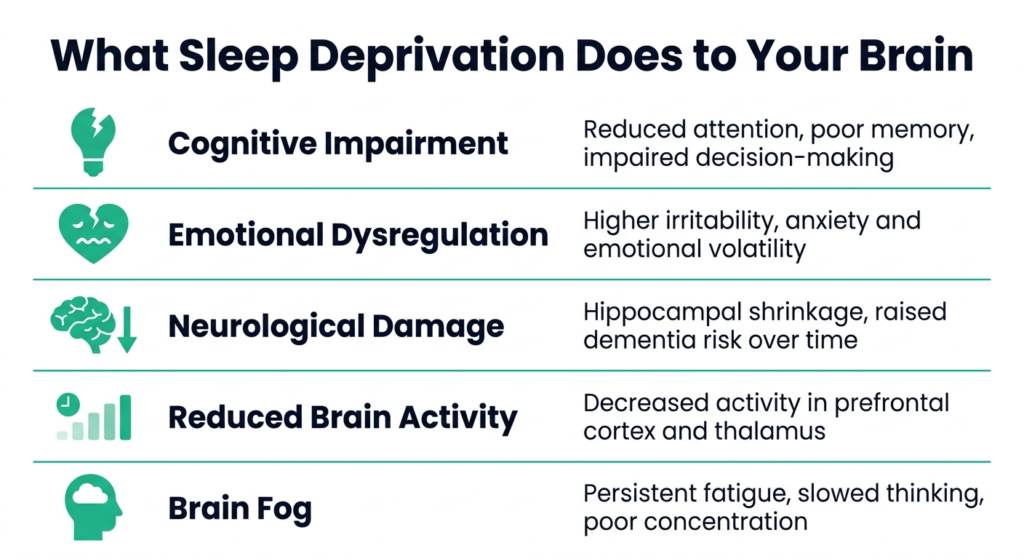
Poor sleep doesn’t just make you tired — it fundamentally impairs how your brain works. Research shows that sleep deprivation affects mental performance including attention, memory consolidation, decision-making, and creative problem-solving. In fact, a single night of poor sleep can reduce cognitive performance as severely as several nights of chronic sleep restriction.
The good news? Learning how to improve sleep quality doesn’t require a complete lifestyle overhaul. Small, strategic changes to your sleep habits can produce significant improvements in both how well you sleep and how well your brain functions the next day. This guide presents seven evidence-based strategies — each with tiered implementation options — so you can start wherever makes sense for your situation.
Why Knowing How to Improve Sleep Quality Matters for Mental Performance
Before diving into the practical strategies, it’s worth understanding why sleep has such a profound effect on cognitive function.
During sleep, your brain isn’t simply resting — it’s actively working. The glymphatic system, essentially your brain’s waste disposal mechanism, becomes highly active during sleep (more about this in our article, Sleep and Cognitive Function). This system clears out metabolic waste products and toxins that accumulate during waking hours, including proteins associated with neurodegenerative diseases. Without adequate sleep, this critical maintenance process is disrupted.
Sleep also plays a crucial role in memory consolidation. During different sleep stages, your brain strengthens neural connections formed during the day, transferring information from temporary storage areas to more permanent ones. During deep NREM sleep, your brain consolidates declarative memories — facts, information, experiences from the day. REM sleep handles procedural memory and emotional processing, integrating complex information and regulating emotional responses. For a deeper look at this process, see our guide on how sleep affects memory.
Research from the UK Biobank study, which examined 479,420 people in middle-to-late life, found that seven hours of sleep per day was associated with the highest cognitive performance — with performance decreasing for every hour below or above this duration. Individuals sleeping between six and eight hours showed significantly greater grey matter volume across 46 brain regions associated with memory, decision-making, and executive function.
The implications for working professionals are clear: consistent, quality sleep isn’t a luxury — it’s a fundamental requirement for peak mental performance.
1. Fix Your Sleep Schedule to Improve Sleep Quality
The single most important factor for improving sleep quality is maintaining a consistent sleep schedule. Your body operates on a circadian rhythm — an internal biological clock that regulates when you feel alert and when you feel sleepy.
Going to bed and waking up at the same time every day, including weekends, helps synchronise this internal clock. When your sleep schedule varies widely — staying up late Friday and Saturday, then trying to “catch up” on Sunday — you’re essentially giving yourself a mild form of jet lag. This social jet lag disrupts your circadian rhythm and makes it harder to fall asleep when you need to.
The research is clear: whilst it might feel appealing to sleep in at weekends, studies demonstrate that weekend catch-up sleep doesn’t fully compensate for weekday sleep deprivation. Irregular sleep patterns are associated with poorer cognitive function in attention, executive functions, and memory.
Implementation tiers
Easy: Lock in your Monday–Friday wake time first. Set your alarm for the same time each weekday and add weekends once that feels natural.
Medium: Choose a wake-up time you can maintain seven days a week. Once you’ve fixed your wake time, count backwards seven to eight hours to determine your target bedtime. Yes, this might mean setting an alarm on Saturday morning.
Advanced: Once your rhythm is established, you’ll wake naturally near your target time without an alarm — the sign that you’re achieving optimal sleep duration. If you’re currently running on a chaotic sleep schedule, shift your bedtime and wake time by 15–30 minutes every few days rather than changing everything overnight.
QUICK WIN:
Tomorrow morning, set your alarm for the same time you’ll wake every day this week — including the weekend. That’s your first sleep quality improvement. Nothing else yet. Just one consistent wake time for seven days and notice how your energy feels by day five.
2. Optimise Your Sleep Environment
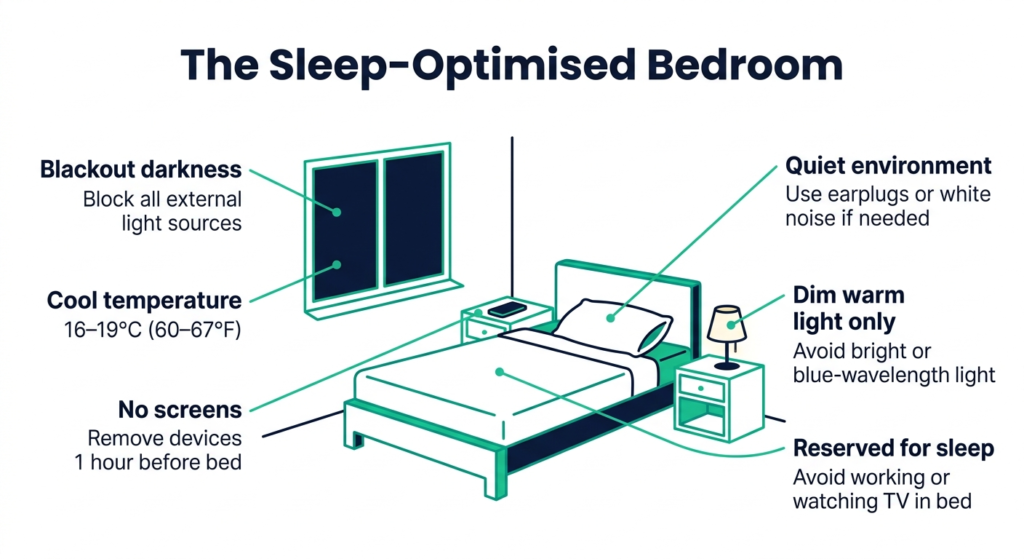
Your bedroom environment significantly influences sleep quality. Three factors deserve particular attention: temperature, light, and noise.
Temperature
Research consistently shows that people sleep better in cooler environments. The optimal bedroom temperature for most people is between 16–19°C (60–67°F). This might feel slightly cool when you first get into bed, but it supports your body’s natural temperature drop during sleep. Your core body temperature decreases as you fall asleep and reaches its lowest point in the early morning hours — a cooler room facilitates this process.
Light
Light exposure is one of the most powerful regulators of your circadian rhythm. Even small amounts of light during the night can disrupt sleep quality by suppressing melatonin production. Invest in blackout curtains or blinds if street lights shine into your bedroom. Turn your alarm clock away from you — watching the minutes tick by when you can’t sleep only increases anxiety. If complete darkness isn’t possible, an eye mask is an affordable alternative.
Noise
Environmental noise can fragment your sleep even if you don’t fully wake up. If you live in a noisy area, consider using earplugs or a white noise machine. Consistent background noise (like a fan or white noise app) can mask disruptive sounds that might otherwise disturb you.
Implementation tiers
Easy: Lower your bedroom thermostat to 18°C tonight. Cover or remove any light-emitting devices. Download a free white noise app if noise is an issue. These small tweaks often produce surprisingly significant improvements.
Medium: Cool room (18°C), warm duvet. Install blackout curtains or blinds. Invest in quality earplugs or a dedicated white noise machine.
Advanced: Smart thermostat that drops temperature 90 minutes before bed and rises 30 minutes before wake time. Circadian-optimised smart bulbs that automatically adjust colour temperature throughout the day, mimicking natural light patterns.
3. Build a Pre-Sleep Wind-Down Routine
Your body doesn’t have an on-off switch for sleep. You can’t expect to be answering work emails or scrolling through social media at 10:45pm and then fall asleep peacefully at 11:00pm. Your brain needs time to transition from wakefulness to sleep.
A consistent pre-sleep routine signals to your brain that it’s time to wind down. This buffer period between your active day and sleep helps reduce the mental arousal that often keeps people awake. The most critical element is avoiding screens — the blue light from phones, tablets, and computers suppresses melatonin production, and the content itself (news, social media, work emails) is often mentally stimulating in ways that work against sleep. For a broader approach to managing screen time, see our digital detox guide.
Research suggests starting your wind-down routine 30–60 minutes before your target bedtime. During this time, engage in genuinely relaxing activities: reading a physical book, listening to calming music, taking a warm bath or shower, gentle stretching, or meditation.
Implementation tiers
Easy: Pick two or three calming activities and do them in the same order each night. Set a reminder 30 minutes before your target bedtime. The specific activities matter less than the consistency.
Medium: Set a “tech sunset” alarm for one hour before bedtime. When it goes off, put your phone somewhere outside your bedroom. Create a consistent sequence — warm shower, light reading, prepare tomorrow’s clothes.
Advanced: Systematic routine with specific timing: warm shower (15 minutes), gentle stretching (10 minutes), reading (20 minutes), breathing exercises (10 minutes). The same pattern nightly reinforces your brain’s sleep association.
4. Time Your Caffeine and Alcohol to Protect Sleep Quality
What you consume — and when — has a substantial impact on how to improve sleep quality. Two substances deserve particular attention.
Caffeine
Caffeine has a half-life of about five to six hours, meaning that half the caffeine from your afternoon coffee is still in your system six hours later. If you have a coffee at 3pm, a quarter of that caffeine is still affecting your brain at 9pm. Even if you can fall asleep, caffeine fragments your sleep architecture, reducing the amount of deep, restorative sleep you achieve.
The standard advice is to avoid caffeine within six hours of bedtime. For most people, this means no caffeine after 2–3pm. However, individual sensitivity varies considerably — some people metabolise caffeine more slowly due to genetic factors and may need to cut off even earlier.
Alcohol
Many people believe alcohol helps them sleep, and it’s true that it can make you feel drowsy initially. However, alcohol significantly disrupts sleep quality. It suppresses REM sleep — the stage associated with memory consolidation and emotional processing — and increases sleep fragmentation. You might fall asleep faster, but the sleep you get is substantially lower quality. Research shows that even moderate alcohol consumption four to six hours before bed can impair sleep quality, with the effect being dose-dependent.
Evening work stress can also interfere with your ability to wind down — batching your email checking to earlier in the day removes one of the most common causes of pre-bed cognitive arousal.
Implementation tiers
Easy: No caffeine after 2pm. If you drink alcohol, finish at least three to four hours before bed. Notice the difference in sleep quality within a week.
Medium: Experiment with moving your caffeine cutoff earlier (1pm, then noon) and track sleep quality differences. Try eliminating alcohol Monday–Thursday and reserve it for weekends.
Advanced: Delay your first caffeine until 90–120 minutes after waking (letting the natural cortisol peak happen first), then none after noon. Try 30 days alcohol-free and compare sleep quality and cognitive performance. Most people are genuinely surprised by the difference.
QUICK WIN:
Move your caffeine cutoff to 2pm today and keep it there for one week. No other changes. Most people notice a measurable difference in sleep depth by day three — particularly how easily they fall asleep and whether they wake during the night.
5. Time Your Exercise to Support Better Sleep
Regular physical activity is one of the most effective ways to improve sleep quality. Exercise helps reduce the time it takes to fall asleep, increases sleep duration, and deepens restorative sleep. However, timing matters.
Exercise increases your core body temperature, elevates adrenaline and cortisol levels, and stimulates your nervous system — all of which promote wakefulness. For this reason, vigorous exercise within two to three hours of bedtime can make it harder to fall asleep. Morning or afternoon exercise consistently shows the strongest benefits for sleep quality. Morning exercise also helps establish a robust circadian rhythm through daylight exposure.
The key distinction is intensity. Gentle activities like walking, stretching, or yoga typically don’t cause sleep problems even when performed close to bedtime — and some people find these activities genuinely aid relaxation in the evening. The cognitive benefits of exercise and the sleep benefits compound when you find an exercise pattern that works for both.
Implementation tiers
Easy: Finish vigorous exercise at least three hours before your target bedtime. Gentle activities (walking, stretching) are fine closer to bedtime.
Medium: If you currently exercise in the evening and struggle with sleep, shift your workout to the morning or afternoon. Morning exercise with daylight exposure provides the added benefit of anchoring your circadian rhythm.
Advanced: Vigorous exercise in the morning (ideally outdoors for light exposure), gentle movement in the evening if desired. If you genuinely prefer evening exercise and it doesn’t affect your sleep, there’s no need to change — consistent exercise at any time is better than none.

6. Manage Worry and Racing Thoughts Before Sleep
Perhaps you’ve experienced this: you’re physically tired, you get into bed at a reasonable time, and then your brain decides it’s the perfect moment to review every mistake you’ve made in the past decade. Racing thoughts and worry are among the most common causes of difficulty falling asleep — when your mind is actively processing problems, you’re in a state of cognitive arousal that’s fundamentally incompatible with sleep.
The solution isn’t to “just stop thinking” — that rarely works. You need strategies to redirect your mind and reduce pre-sleep cognitive load.
The worry dump
Keep a notebook next to your bed. If worries or to-do items pop up as you’re trying to fall asleep, write them down. This simple act of externalising the thought reduces the urgency you feel to keep processing it — your brain can relax knowing the information is captured. Similar to how the 5-Item Method reduces daily cognitive load, a pre-bed brain dump reduces night-time mental activation.
Scheduled worry time
Set aside 15 minutes earlier in the evening — not right before bed — specifically for worrying and problem-solving. Write down your concerns and potential solutions. When worries arise at bedtime, remind yourself that you’ve already addressed them during your scheduled worry time. This sounds deceptively simple. It works.
Cognitive redirection
If you find yourself ruminating, try redirecting your attention to something genuinely boring. Count backwards from 1000 by sevens. Visualise a peaceful scene in extensive detail. Some people find it helpful to replay a familiar film or book in their mind — familiar enough that it doesn’t generate new thoughts, but engaging enough to prevent worrying.
Implementation tiers
Easy: Keep a notebook by your bed. Before your wind-down routine, write down anything bothering you. Just listing the items often provides immediate relief.
Medium: Create a structured brain dump with sections for tasks, worries, decisions, and ideas. Categorising helps your brain feel organised and reduces the urge to keep processing.
Advanced: Brain dump plus selecting tomorrow’s priorities 15 minutes before your wind-down routine begins. Your brain knows tomorrow is handled — it can rest tonight.
7. The 20-Minute Rule: When You Can’t Sleep, Get Up
Here’s a mistake many people make: lying in bed awake for hours, becoming increasingly frustrated about not being able to sleep. This creates a problematic association between your bed and wakefulness — and over time, that association can worsen insomnia significantly.
Sleep specialists recommend stimulus control therapy: your bed should be strongly associated with sleep, not with lying awake feeling anxious. The 20-minute rule works like this — if you haven’t fallen asleep within approximately 20 minutes of getting into bed (or wake during the night and can’t return to sleep), get out of bed. Don’t watch the clock obsessively — if it feels like it’s been about 20 minutes, that’s close enough.
Go to another room and do something genuinely boring in dim light. Read something uninteresting, fold laundry, or sit quietly. Avoid anything stimulating: no screens, no bright lights, no engaging activities. When you start to feel genuinely sleepy — heavy eyelids, difficulty focusing — return to bed. This might happen multiple times in one night initially, and that’s fine. The goal is to rebuild the association between bed and sleep onset.
Implementation tiers
Easy: If you can’t sleep after what feels like 20 minutes, get up. Have a boring book or magazine ready in another room. Return to bed only when genuinely sleepy.
Medium: Apply the 20-minute rule every time you can’t sleep, including middle-of-the-night awakenings. Many people find that simply having the option to get up paradoxically reduces their anxiety about not sleeping — making it easier to actually fall asleep.
Advanced: When you get up, engage in a specific relaxation sequence — gentle stretching, breathing exercises, then boring reading. Return to bed when sleepy. The first time you try this, it feels counterintuitive. Do it anyway.
QUICK WIN:
Track your sleep duration for one week without trying to change anything. Most people who do this discover they’re averaging 45–60 minutes less than they thought. Knowing your actual baseline is the starting point for any meaningful change — a simple note on your phone is enough, no app required.
What Happens When You Improve Sleep Quality
The effects of better sleep quality compound over time — and they’re larger than most people expect.
Days 1–3: Improved alertness upon waking, easier morning wake-up without grogginess, reduced afternoon energy slump.
Week 1: Better focus during deep work, improved decision-making capacity, emotional regulation feels easier, reduced reliance on afternoon caffeine.
Weeks 2–4: Memory consolidation improves noticeably — information retention from studying or meetings becomes easier. Creativity increases, problem-solving becomes sharper, stress resilience improves.
Long-term (months): Sustained cognitive performance, reduced anxiety levels, better stress resilience, maintained executive function, and reduced risk of cognitive decline. The long-term case for improving sleep quality is as strong as the immediate performance case — sleep quality in midlife is one of the few modifiable risk factors for dementia.
When to Seek Professional Help
Most people improve significantly with these seven strategies. But if you’ve implemented good sleep hygiene consistently for four to six weeks and still experience problems, consider whether something else is at play.
Sleep disorders like sleep apnoea, restless leg syndrome, or narcolepsy require medical treatment — sleep hygiene helps but doesn’t cure them. Warning signs include loud snoring, gasping during sleep, irresistible leg movements, or extreme daytime sleepiness despite adequate sleep duration.
Medication effects are worth investigating — beta blockers, corticosteroids, some antidepressants, and stimulant medications can all disrupt sleep quality. Discuss alternatives with your GP if you suspect medication is the issue.
Underlying conditions, including chronic pain, hormonal imbalances, anxiety disorders, or depression significantly impact sleep quality and require specific treatment alongside sleep hygiene improvements. If sleep problems persist despite consistent good sleep hygiene, consult your GP — quality sleep is too important for cognitive function to accept chronic problems without investigation.
Your Implementation Plan for Better Sleep Quality
Don’t change everything simultaneously. That’s overwhelming and rarely sustainable.
Start this week with one change: a fixed wake time. Just that. Wake at the same time every day for seven days, including weekends. Next week, add a second change — temperature or caffeine cutoff, whichever feels most achievable. Continue adding one strategy per week until you’ve implemented all seven that feel relevant to your situation.
The cumulative effect of all seven changes is dramatically greater than any single intervention. And the relationship between sleep and cognitive performance is bidirectional — better sleep improves your mental performance during the day, which in turn makes it easier to maintain healthy sleep habits. Conversely, poor sleep impairs the self-regulation that makes new habits stick.
Sleep isn’t a productivity sacrifice — it’s the foundation that determines how much of your cognitive capacity is actually available. The person who sleeps seven to eight hours and works effectively typically outperforms the person who sleeps five to six hours and muddles through with impaired attention and slower decision-making. For the complete science behind why this is the case, see our in-depth guide on sleep and cognitive function.
RESOURCES:
I only recommend resources that I either use personally or have researched and feel are genuinely helpful for my readers. Resources sometimes contain affiliate links; if you purchase through these, I may earn a small commission at no extra cost to you.
Recommended reading
Why We Sleep: The New Science of Sleep and Dreams — Matthew Walker. The most comprehensive and accessible account of what sleep science actually shows — covering cognitive performance, memory, mental health, and long-term brain health. Essential reading for anyone who has ever justified cutting sleep short. Paperback | Kindle | Audible
The Organised Mind: Thinking Straight in the Age of Information Overload — Daniel Levitin. A neuroscientist’s guide to how the brain manages cognitive load, with a strong chapter on sleep’s role in mental clarity and decision-making. Paperback | Kindle
Related articles
Sleep and Cognitive Function — The complete neuroscience behind why sleep determines how well your brain performs.
How Does Sleep Affect Memory? — How sleep consolidates learning and why studying before bed works better than you think.
How to Maintain Mental Energy — Sleep is the foundation; this covers the strategies that build on it throughout the day.
Best Exercise for Brain Health — Exercise and sleep reinforce each other as the two highest-leverage behaviours for long-term cognitive health.
Stress Management for Mental Performance — How chronic stress disrupts sleep and amplifies the cognitive costs of poor rest.
I'm Simon Shaw, a Chartered Occupational Psychologist with over 20 years of experience in workplace psychology, learning and development, coaching, and teaching. I write about applying psychological research to everyday challenges - from habits and productivity to memory and mental performance. The articles on this blog draw from established research in psychology and behavioural science, taking a marginal gains approach to help you make small, evidence-based changes that compound over time, allowing you to make meaningful progress in the areas you care about most.