Dehydration and Brain Function: Why Your Brain Needs Water

You know that foggy-headed feeling when you wake up? The one where reading your emails feels like wading through treacle? There’s a decent chance your brain is simply thirsty. Your brain is round 75% water, and even small drops in that water content affect how well you think — making the relationship between dehydration and brain function one of the most overlooked aspects of cognitive performance.
The glass of water you skipped this morning might be why that report feels harder to write than it should. Staying hydrated affects your brain through several connected pathways: it keeps blood flowing properly so oxygen and nutrients reach your neurons, it helps produce and transport the chemical messengers your brain cells use to communicate, and it prevents your body from overheating in ways that stress your brain. When your water balance shifts even slightly, your mental performance drops measurably.
Research consistently shows that even mild dehydration — losing just 1–2% of your body’s water — impairs your attention, memory, and ability to plan and make decisions. Yet whilst most people carefully track their caffeine and sleep, hydration often gets ignored entirely.
QUICK WIN:
Drink 500ml of water within 30 minutes of waking tomorrow morning. Keep a full glass by your bedside tonight so you don’t even need to think about it. Notice how your morning mental clarity compares to your usual start — most people notice a difference within a few days of making this a consistent habit.
Why Dehydration and Brain Function Are So Closely Linked
Your brain contains more water than most other organs, making it particularly vulnerable when you get dehydrated. Your brain cells need very precise conditions to work — specific balances of salts and electrical charges that depend on having enough water to maintain the right fluid balance inside and around cells.
When you get dehydrated, several things go wrong simultaneously. Less blood reaches your brain because there’s simply less blood volume to pump around. This means less glucose and oxygen getting to your energy-hungry brain cells. Brain imaging studies show something fascinating: when people are dehydrated, their brains have to work harder to do the same tasks. More areas light up on the scan, showing increased effort. This extra work explains why you feel mentally exhausted even when your actual performance hasn’t dropped yet — your brain is compensating, burning extra energy to maintain the same output.
Research using brain scans reveals that specific brain regions get affected. Areas involved in attention and catching your own mistakes show altered activity patterns. Parts of your brain critical for decision-making and emotional regulation show reduced activity. These aren’t blanket impairments — dehydration specifically disrupts the higher-level thinking functions that depend on your brain running efficiently.
Here’s the mechanism: when you lose water, the concentration of dissolved particles in your blood increases. Your brain detects these concentration changes through specialised neurons, triggering thirst and altering how your brain functions to prioritise finding water. Studies show that even a 1–2% increase in this concentration correlates with measurable drops in mental performance — and crucially, this can happen before you feel thirsty.
Understanding Dehydration Levels: When Brain Performance Drops
Dehydration gets measured as percentage of body weight lost through fluid. If you weigh 70 kilograms and lose 1.4 kilograms of fluid, you’re 2% dehydrated. This gives us a standardised way to understand when impairment kicks in, though people vary quite a bit in their responses.
Mild dehydration (1–2% body weight loss) produces measurable cognitive effects in research studies. People show reduced performance on attention tasks, slower reactions, and impaired short-term memory. Subjectively, you feel more tired, struggle to concentrate, and your mood worsens. These effects emerge before you necessarily feel thirsty — thirst is actually a poor indicator of when you need water.
Moderate dehydration (3–5% body weight loss) amplifies these problems substantially. Your ability to plan, make decisions, and switch between different ways of thinking deteriorates markedly. Research on military personnel shows that 4% dehydration produces cognitive problems comparable to staying awake for 24 hours straight.
Severe dehydration (more than 5% body weight loss) creates substantial physical stress requiring medical attention. The concern for daily mental performance centres on preventing mild to moderate dehydration — severe dehydration is a medical emergency most people will never encounter in normal life.
Individual vulnerability varies considerably based on age, sex, baseline fitness, and heat acclimatisation. Women typically show greater cognitive sensitivity to mild dehydration than men. Elderly people demonstrate more pronounced impairments at lower dehydration levels. Children, with their higher body water turnover rates, can develop cognitive symptoms from relatively small fluid losses.
QUICK WIN:
Pay attention to your own dehydration signals this week. Notice when you feel unusually tired mid-afternoon, when concentration becomes difficult, or when headaches appear without obvious cause. Before reaching for coffee, try drinking 300ml of water and wait 15 minutes. Track whether this resolves the symptom — most people are surprised how often it does.
Which Mental Skills Are Hit Hardest by Dehydration
Not all mental abilities suffer equally from dehydration and brain function research reveals a clear hierarchy of vulnerability — some functions decline rapidly whilst others prove remarkably resilient.
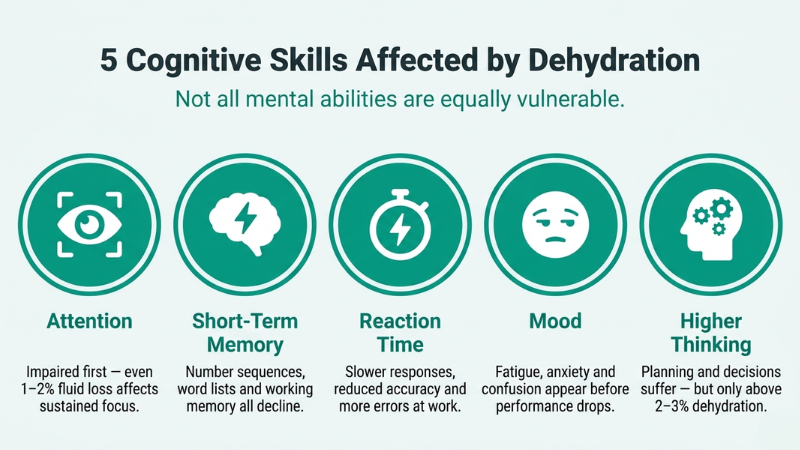
Attention and staying focused prove particularly sensitive. Studies consistently show that even 1–2% dehydration impairs sustained attention — your ability to maintain focus on important tasks over long periods. This explains why office workers often experience afternoon concentration lapses that a glass of water can temporarily fix.
Short-term memory shows reliable impairment from mild dehydration. Research shows reduced performance on remembering sequences of numbers, word lists, and working memory tasks. One study found that 12 hours without water significantly impaired short-term memory, with rehydration restoring function within 30 minutes.
Reaction time and coordination decline noticeably. Your reactions slow, fine motor control deteriorates, and hand-eye coordination suffers. For knowledge workers, this shows up as slower typing, reduced mouse accuracy, and increased errors in data entry — subtle effects that can meaningfully reduce productivity across a working day.
Mood demonstrates surprising sensitivity to hydration. Studies consistently report that even mild dehydration increases fatigue, anxiety, and confusion whilst reducing alertness. These subjective changes often appear before measurable performance drops, making them useful early warning signals.
Higher-level thinking shows mixed vulnerability. Complex decision-making, planning, and mental flexibility appear more resistant to mild dehydration. However, once dehydration exceeds 2–3%, these impairments become pronounced. Interestingly, long-term memory and vocabulary remain largely intact even at moderate dehydration levels.
Where Your Water Goes: Understanding Daily Fluid Loss
Understanding how you lose fluid helps prevent dehydration before mental impairment occurs. The average adult loses about 2–3 litres daily through normal processes — more during hot weather or physical activity.
Urination represents the largest single route of water loss, typically 1–2 litres daily. When properly hydrated, urine appears pale yellow; concentrated, dark urine signals insufficient intake.
Breathing causes continuous water loss through exhaled air — roughly 400ml daily at rest, substantially more during exercise or in dry environments. This “invisible loss” occurs without awareness, making it easy to underestimate. Office environments with low humidity accelerate this, contributing to afternoon cognitive decline.
Sweating represents your body’s primary cooling mechanism. Even at rest in comfortable temperatures, you lose 500–700ml daily through baseline perspiration. Office workers often underestimate their fluid needs because they’re not obviously sweating, yet water loss continues regardless.
Caffeine produces modest diuretic effects, though contrary to popular belief, tea and coffee still contribute positively to overall hydration. Research shows that regular caffeine consumers experience negligible net diuretic effects from moderate intake — the fluid volume substantially exceeds any caffeine-induced urinary losses.
Optimal Hydration Strategies for Dehydration and Brain Function
Maintaining hydration requires systematic rather than reactive approaches. Waiting until you feel thirsty produces suboptimal results — thirst typically signals existing mild dehydration rather than prompting preventive intake.
The European Food Safety Authority suggests 2.0 litres daily for women and 2.5 litres for men from all sources combined. About 20% of daily water intake typically comes from food, particularly fruits and vegetables — so your actual drinking target is somewhat lower than the headline figures suggest.
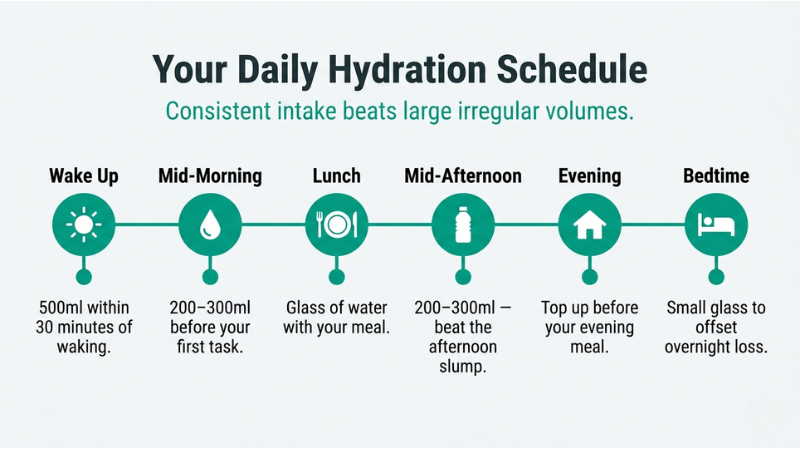
Morning hydration proves particularly important. Overnight without drinking typically produces mild dehydration by morning, contributing to that common experience of mental sluggishness. Drinking 500ml within 30 minutes of waking jumpstarts rehydration and supports morning mental performance.
Pre-emptive hydration before mentally demanding periods enhances performance. Studies show that drinking water 15–30 minutes before attention-intensive tasks improves subsequent performance. This is particularly valuable before meetings, presentations, or complex problem-solving sessions.
Regular interval drinking throughout the day maintains stable hydration better than infrequent large volumes. Drinking 200–300ml every 1–2 hours prevents fluid deficit building whilst aligning with natural cognitive energy rhythms.
Environmental adjustments matter more than willpower. Keeping water visible and accessible removes friction — a filled glass on your desk functions as both reminder and enabler. Using a marked bottle that tracks intake provides concrete feedback without requiring thought or discipline.
How to Check Your Hydration Status
Monitoring your hydration helps calibrate your awareness. You don’t need perfect precision — understanding whether you’re generally well-hydrated versus chronically under-hydrated enables appropriate adjustments.
Urine colour provides a practical, non-invasive indicator. Aiming for pale yellow suggests adequate hydration, whilst darker colours indicate increasing dehydration. Check first-morning urine for a baseline and throughout the day to monitor whether your intake is working. Note that Vitamin B supplements produce bright yellow urine regardless of hydration status.
Thirst offers another signal, though it lags behind your actual needs. By the time you feel thirsty, you’re typically already 1–2% dehydrated — precisely the threshold where mental impairment begins. Ageing also diminishes thirst sensitivity, making it particularly unreliable for older adults.
Functional indicators are often underused. If concentration feels unusually difficult, fatigue seems disproportionate to your efforts, or headaches emerge without obvious cause, consider hydration as a potential contributor before reaching for caffeine or medication.
QUICK WIN:
Check your urine colour after your next bathroom visit. If it’s darker than pale yellow — think lemonade, not apple juice — drink 300ml of water right now. Make this quick check part of your routine for the next week. It takes two seconds and gives you an immediate, objective signal about your hydration status that no app or tracker can improve on.
Special Considerations: Who Needs Extra Attention
Certain groups demonstrate heightened vulnerability to dehydration’s cognitive effects, requiring adapted strategies.
Older adults face multiple hydration challenges. Kidney function declines with age, reducing your body’s ability to concentrate urine and conserve water. Thirst sensation diminishes, eliminating a primary prompt for drinking. Medications common in elderly populations often increase fluid loss. Studies of over 1,000 adults aged 65+ found significant associations between hydration status and cognitive function, with dehydrated individuals showing higher dementia risk — making structured rather than intuitive hydration approaches particularly important for this group.
Women demonstrate greater cognitive sensitivity to mild dehydration than men in most research studies. The mechanism remains incompletely understood but may involve sex differences in fluid distribution, body composition, and hormonal influences.
Athletes and physically active individuals require substantially elevated intake to offset sweat losses. Even recreational exercise produces fluid deficits affecting subsequent cognitive function. For active individuals, combining exercise benefits with cognitive performance demands strategic hydration before, during, and after physical activity.
Environmental Factors Affecting Your Water Needs
Heat exposure increases water needs through elevated sweating. Research on military personnel in desert conditions found that 3–4% dehydration in hot environments produced cognitive impairments equivalent to 5–6% dehydration in temperate conditions — the combined effect of heat and dehydration is substantially worse than either alone.
Air conditioning and central heating create artificially dry environments that accelerate water loss through breathing and skin. Office workers in climate-controlled buildings often underestimate their fluid needs because comfortable temperatures mask ongoing dehydration. Research suggests low-humidity environments increase daily water requirements by 200–400ml.
Air travel presents specific challenges. Aircraft cabins maintain extremely low humidity — typically 10–20% — dramatically increasing water loss through breathing. Strategic pre-flight hydration and at least 250ml per hour during flights helps maintain cognitive function on longer journeys.
Beyond Plain Water: Other Hydration Sources
Tea and coffee contribute positively to overall hydration despite containing caffeine. The fluid volume substantially exceeds any caffeine-induced urinary losses in regular consumers.
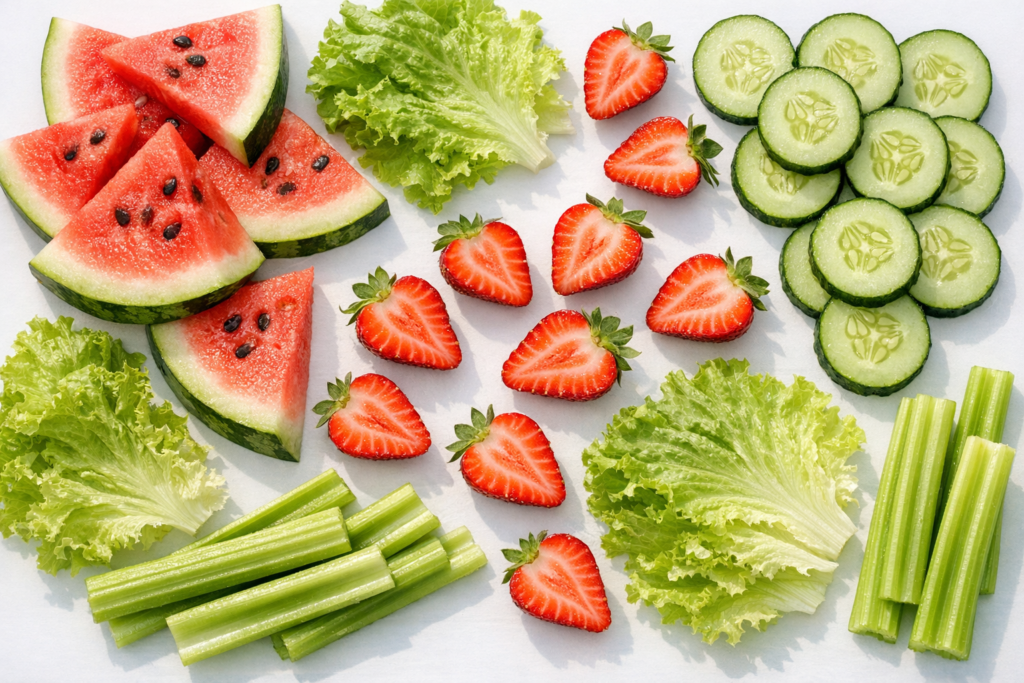
Fruits and vegetables provide substantial water content. Cucumbers, lettuce, celery, and tomatoes contain over 90% water. A diet rich in these foods can provide 500–800ml daily, reducing drink requirements whilst delivering additional nutritional benefits.
Alcoholic drinks produce net fluid loss. Alcohol suppresses anti-diuretic hormone, increasing urination beyond the volume consumed. Drinks containing more than 4% alcohol produce net dehydration — and the cognitive effects of alcohol dramatically exceed any hydration-related impacts.
Common Hydration Myths Worth Correcting
The “8 glasses daily” recommendation lacks scientific foundation. It originated from a 1945 US Food and Nutrition Board statement that included fluid from all sources including food — a detail frequently lost in subsequent popularisation. Optimal intake varies substantially based on individual factors.
Caffeinated drinks don’t dehydrate you — at least not in the way the myth suggests. Moderate caffeine consumption produces negligible net fluid loss in regular consumers.
Clear urine indicates overhydration, not optimal hydration. Very pale, colourless urine occurs when fluid intake substantially exceeds your body’s needs. Pale yellow is the target.
Building Your Hydration System to Protect Brain Function
Converting knowledge into consistent behaviour requires environmental design that makes adequate hydration automatic rather than effortful.
Environmental restructuring proves more effective than relying on memory or willpower. Keep filled water bottles or glasses in locations where you spend significant time: desk, bedside table, car. The visibility and proximity dramatically increase consumption — research on habit formation shows that reducing friction for desired behaviours substantially increases adherence.
Time-based drinking schedules help maintain consistency. Simple rules work well: drink upon waking, with each meal, mid-morning, mid-afternoon, and evening. This provides approximately 6–7 drinking occasions daily, making the 2–2.5 litre target achievable through 300–400ml servings. Link drinking to existing routines — after bathroom visits, before checking email — to build automatic associations.
Performance tracking provides personalised feedback. On days when you maintain consistent hydration, note your mental clarity, attention span, and mood. Compare this to days when intake lapses. That experiential evidence often motivates continued adherence better than abstract recommendations.
QUICK WIN:
Link water drinking to an existing habit you already do consistently — after you sit down at your desk, drink 200ml. After each bathroom visit, drink 200ml. After you check your email, drink 200ml. Choose one pairing and start tomorrow. This habit stacking approach turns hydration into an automatic behaviour rather than something you have to remember.
The Bottom Line on Dehydration and Brain Function
Hydration represents one of the most fundamental yet frequently overlooked factors in cognitive performance. Unlike many performance interventions requiring substantial investment or complex implementation, adequate hydration requires only awareness and modest behavioural adjustment.
The evidence on dehydration and brain function is clear: better hydration predicts better cognitive performance across multiple domains. Your brain evolved to operate optimally when properly hydrated — dehydration represents an avoidable handicap, not an inevitable state. Even small improvements in hydration status produce measurable cognitive benefits.
Begin today with one change. Perhaps it’s keeping water visible on your desk. Maybe it’s drinking a full glass immediately upon waking. Or linking water intake to a specific daily event. Your brain — that 1.4-kilogram organ that’s 73% water — will thank you through clearer thinking, sustained attention, and more stable mood.
RESOURCES:
I only recommend resources that I either use personally or have researched and feel are genuinely helpful for my readers. Resources sometimes contain affiliate links; if you purchase through these, I may earn a small commission at no extra cost to you.
Recommended reading
Spark: The Revolutionary New Science of Exercise and the Brain — John Ratey. Explores how physical activity transforms cognitive performance — including the role of lifestyle factors like hydration in brain chemistry. Essential reading for anyone serious about mental performance. Paperback | Kindle
Healthy Brain, Happy Life — Wendy Suzuki. A neuroscientist’s practical guide to keeping your brain sharp, covering lifestyle factors including hydration, exercise, and sleep. Written for a general audience without sacrificing scientific rigour. Paperback
Recommended Product
Hydracy Time-Marked Water Bottle (1 litre) — The single most effective environmental change you can make for hydration. A marked bottle on your desk removes the need to guess or track — you can see at a glance whether you’re on target for the day. Check on Amazon
Related Articles
How to Improve Mental Performance — The complete framework for optimising your cognitive output.
Maintain Mental Energy — How to sustain focus and cognitive performance across a full working day.
Best Exercise for Brain Health — The research on which types of physical activity produce the greatest cognitive benefits.
Sleep and Cognitive Function — How sleep quality directly affects memory, attention and decision-making.
Environment Design for Habits — How to structure your surroundings to make good behaviours automatic.
I'm Simon Shaw, a Chartered Occupational Psychologist with over 20 years of experience in workplace psychology, learning and development, coaching, and teaching. I write about applying psychological research to everyday challenges - from habits and productivity to memory and mental performance. The articles on this blog draw from established research in psychology and behavioural science, taking a marginal gains approach to help you make small, evidence-based changes that compound over time, allowing you to make meaningful progress in the areas you care about most.