
Stress Management for Mental Performance

You know that feeling when you’re staring at your screen, trying to remember what you were just doing, whilst simultaneously worrying about three other things? That’s stress literally shrinking your brain’s working capacity in real-time. Effective stress management for mental performance isn’t a luxury — it’s what determines whether your brain actually functions well under pressure, or just pretends to.
The annoying part? Stress isn’t going anywhere. Work deadlines, money worries, difficult conversations, and the mental gymnastics of daily life aren’t optional extras you can decline. The solution isn’t becoming a zen monk (good luck with that whilst raising kids and holding down a job), but rather developing practical techniques that keep your brain functioning well despite the pressure.
This guide explains what stress actually does to your thinking, then gives you evidence-based techniques that work in real life — not just in controlled laboratory conditions. Whether you’re managing workplace chaos or everyday demands, these are practical strategies backed by psychological research, not generic “treat yourself to a bubble bath” wellness platitudes.
How Stress Impairs Cognitive Function
Understanding what stress does to your brain helps explain why you can’t just “think harder” your way through high-pressure situations.
The Stress Response and the Prefrontal Cortex
When you experience stress, your hypothalamic-pituitary-adrenal (HPA) axis kicks in, releasing cortisol and other stress hormones. In short bursts, this actually helps — you get more alert and focused for immediate challenges. Think of it as your brain’s emergency response system.
The problem starts when stress becomes chronic or intense. Research shows that sustained stress particularly hammers your prefrontal cortex — the brain region handling working memory, attention control, planning and decision-making. Neuroimaging studies reveal reduced prefrontal activation during cognitive tasks when people are stressed, whilst emotional brain regions like the amygdala light up like a Christmas tree.
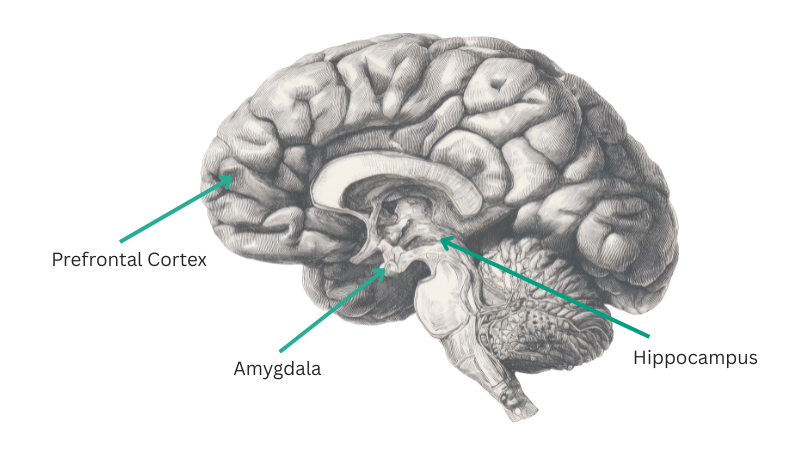
These three regions interact in ways that directly affect your thinking. The prefrontal cortex loses executive authority — its ability to regulate impulses, weigh consequences and direct attention weakens under sustained cortisol. The amygdala becomes hyperactive, scanning for threats and generating emotional responses that bypass rational evaluation — which is why stressed people react disproportionately to minor provocations. Most significantly for long-term performance, the hippocampus — which consolidates new memories and supports learning — is particularly vulnerable to chronic stress. Sustained elevated cortisol actually reduces hippocampal volume over time, impairing memory formation and the ability to put current stressors in context. This is why chronic stress doesn’t just affect how you think today; it affects your cognitive capacity over months and years and the distinction between stress and burnout begins to blur. If you’re concerned you’ve crossed that line, see our guide on how to recover from mental burnout.
This makes evolutionary sense, even if it’s inconvenient for modern life. When facing a genuine threat, detailed rational analysis matters less than fast, emotion-driven responses. Your brain essentially trades accuracy for speed, prioritising survival over optimal thinking. The issue? Modern stressors — project deadlines, difficult conversations, financial worries — trigger this same response despite needing careful thought rather than rapid action. Your brain’s treating that email from your manager like a sabre-toothed tiger.
Overthinking is often a stress response — the mind stuck in problem-solving mode without resolution. If rumination is a pattern for you, our guide on how to stop overthinking addresses this directly.
Working Memory Under Pressure
Working memory — your capacity to temporarily hold and juggle information — takes a particularly hard hit from stress. Studies examining stress effects on working memory consistently find impairments, with research showing stress reduces your mental workspace whilst sparing precision for whatever information does make it through.
Practically, this shows up as difficulty juggling multiple things simultaneously. When stressed, you might struggle to hold meeting details in mind whilst formulating responses, or find yourself completely losing track of what you were doing when switching between tasks. The cognitive workspace shrinks, forcing you to externalise everything through notes or repeated checking rather than managing complexity mentally. If you’ve ever found yourself re-reading the same email three times without absorbing it, this is why.
Research involving non-depressed adults found clear relationships between stress, anxiety and working memory performance. The mechanism? Stress-induced worrying thoughts and emotional responses occupy mental space that would otherwise support actual task performance. It’s like trying to work on your laptop whilst running fifteen background applications — everything slows down. Learn more about this in our article, how to improve working memory.
Attention and Executive Function
Beyond working memory, stress significantly impairs your ability to control attention. Research demonstrates that stress reduces your capacity to filter irrelevant information, sustain focus over time and resist distractions. This creates a vicious cycle — stress makes it harder to concentrate, leading to reduced productivity, which generates further stress about falling behind.
Executive functions — higher-order cognitive processes including planning, cognitive flexibility and response inhibition — also deteriorate under stress. Meta-analytic evidence confirms moderate negative effects of stress on executive function tasks. When stressed, you become less adaptable, more likely to keep hammering away at ineffective strategies, and slower to shift mental gears between different types of thinking.
The practical implications extend throughout professional and personal life. Stressed individuals make poorer financial decisions, show reduced creative problem-solving, and demonstrate impaired judgement on ethical dilemmas. The cognitive impairment isn’t merely subjective feeling — it’s measurable decline in thinking quality.
The Inverted-U: When Stress Helps and When It Hurts Performance
Here’s the slightly counterintuitive bit: not all stress impairs performance. The Yerkes-Dodson Law, established over a century ago, describes an inverted U-shaped relationship between arousal and performance. Moderate stress can actually enhance performance by increasing alertness, motivation and focus. Too little stress leads to boredom and disengagement; too much overwhelms your cognitive resources.
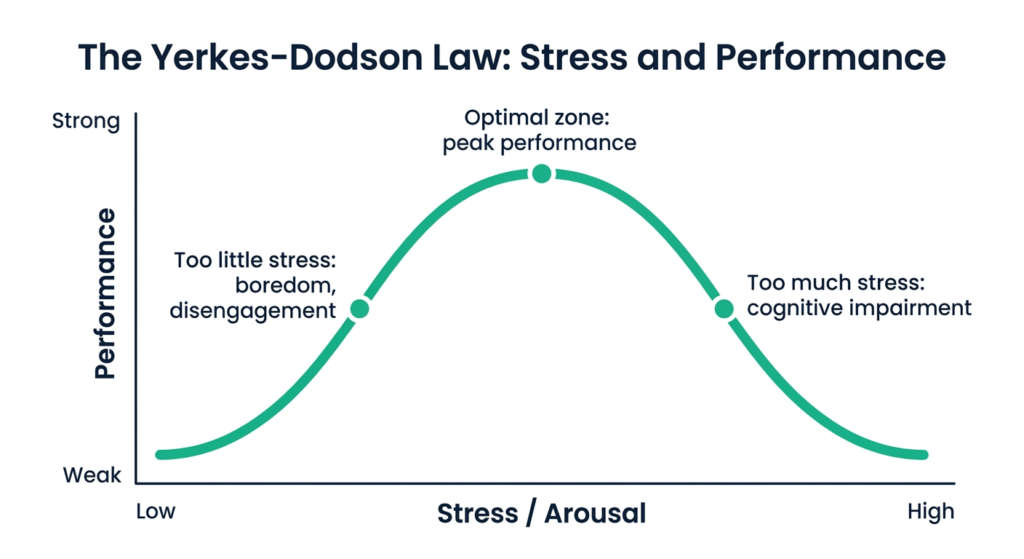
The optimal stress level varies by individual and task complexity. Simple, well-learned tasks tolerate higher stress levels before performance deteriorates. Complex tasks requiring careful thought and working memory show impairment at lower stress thresholds. This explains why you might perform routine tasks adequately when stressed, whilst struggling with novel problems or strategic thinking. You can probably still make tea when stressed; writing a strategic report becomes significantly harder.
Understanding this relationship matters for managing mental energy effectively. The goal isn’t eliminating stress but rather maintaining it within a performance-enhancing range rather than letting it spiral into cognitive impairment. When stress tips over into the performance-degrading zone, specific techniques can help restore optimal function.
QUICK WIN:
Next time you notice stress building, take 60 seconds for three rounds of box breathing: inhale for 4 counts, hold for 4, exhale for 4, hold for 4. You can do this at your desk, in a meeting, or waiting for your laptop to load. It works immediately.
Evidence-Based Stress Management Techniques for Mental Performance
Psychological research has identified several intervention categories that demonstrably reduce stress and protect cognitive function. Meta-analyses examining controlled trials provide clear evidence for which approaches work most effectively.
Mindfulness and Meditation
Mindfulness-based interventions show the strongest evidence for reducing physiological stress markers. A comprehensive meta-analysis of 58 randomised controlled trials found that mindfulness and meditation interventions produced medium effect sizes (g = 0.345) in reducing cortisol levels — larger than mind-body therapies or talking therapies.
The mechanism involves training attention regulation and present-moment awareness. Rather than getting caught in worry cycles about past events or future threats, mindfulness practice develops your capacity to observe thoughts without becoming consumed by them. This reduces the cognitive resource competition that stress creates — essentially freeing up mental bandwidth.
Research demonstrates that even brief mindfulness training produces measurable cognitive benefits. Four days of 20-minute meditation sessions improved working memory, executive function and visuospatial processing in one study. The effects aren’t merely subjective — neuroimaging shows increased prefrontal cortex activation and reduced amygdala reactivity in regular practitioners.
For practical implementation, start small. Really small. Five to ten minutes daily beats ambitious 30-minute sessions you’ll never actually do. The mindfulness techniques that enhance focus also serve as powerful stress management tools, creating synergy between cognitive enhancement and stress reduction.
Progressive Muscle Relaxation
Progressive muscle relaxation (PMR) involves systematically tensing then releasing muscle groups throughout your body, typically starting from your feet and moving upward. This technique, established since the 1930s, produces both immediate relaxation and longer-term stress reduction with regular practice.
Meta-analytic evidence shows relaxation techniques (including PMR) produce results that are comparable to mindfulness for cortisol reduction. The mechanism differs — where mindfulness works through mental attention training, PMR operates through the body, activating your parasympathetic nervous system and reducing the physical tension that accompanies stress.
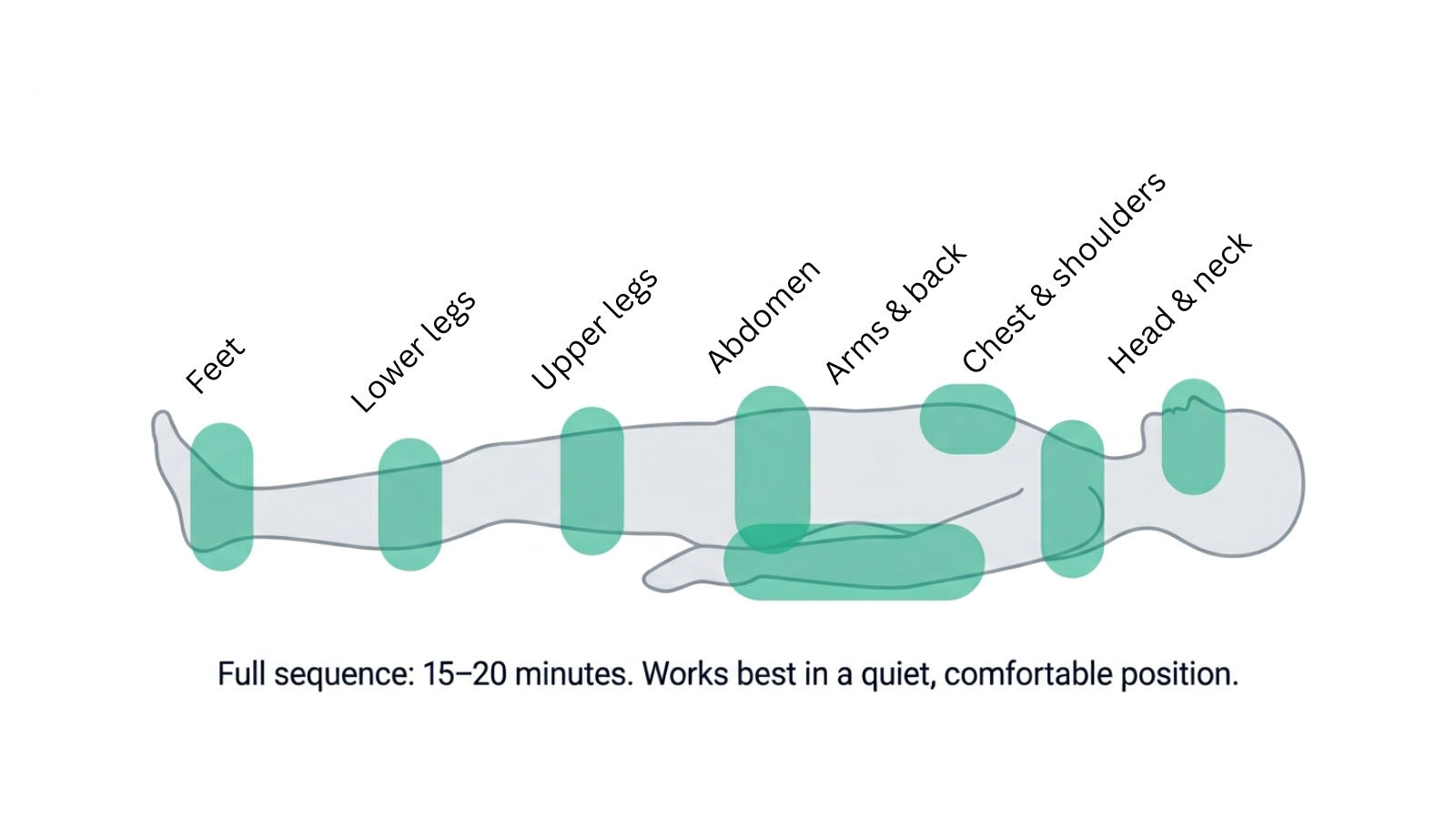
Research in workplace settings demonstrates practical effectiveness. A study with automotive assembly line workers found that even 10–15 minutes of PMR per session significantly decreased self-perceived stress levels, with benefits maintained through follow-up assessments.
To practise PMR: find a comfortable position, take several deep breaths, then begin with your feet. Tense the muscles for 5–10 seconds, focusing on the sensation of tension. Release and notice the contrasting feeling of relaxation for 10–20 seconds. Progress through calves, thighs, abdomen, chest, hands, arms, shoulders, neck and face. The complete sequence takes 15–20 minutes initially, though abbreviated versions work for quick stress relief.
Controlled Breathing Techniques
Breathing exercises offer immediate stress reduction that can be deployed anywhere, anytime. The mechanism involves activating the vagus nerve, which signals your parasympathetic nervous system to reduce stress responses. Unlike techniques requiring extended practice, breathing exercises work immediately whilst also showing cumulative benefits.
Box Breathing involves equal counts for inhale, hold, exhale and hold — typically 4 counts each. Inhale through your nose for 4, hold for 4, exhale through your mouth for 4, hold for 4. Repeat for 2–5 minutes. This technique, used by military personnel and athletes, rapidly reduces arousal and improves focus.
Diaphragmatic Breathing emphasises deep belly breathing rather than shallow chest breathing. Place one hand on your chest and one on your abdomen. Breathe so that your abdomen rises whilst your chest remains relatively still. This activates your diaphragm and promotes fuller oxygen exchange, reducing the physiological stress response.
4-7-8 Breathing uses unequal counts: inhale for 4, hold for 7, exhale for 8. The extended exhale particularly activates the parasympathetic response. This pattern proves especially useful before situations requiring calmness — important meetings, presentations or difficult conversations.
Unlike meditation or PMR, you can employ breathing exercises whilst sitting at your desk, stuck in traffic or facing an immediate stressor. Regular practice — even 2–3 minutes several times daily — builds your capacity to quickly downregulate stress responses.
Physical Exercise
Regular physical activity represents one of the most effective stress management strategies, with additional benefits extending beyond stress reduction to overall cognitive enhancement. Exercise influences multiple mechanisms: reducing cortisol levels, releasing endorphins, improving sleep quality and enhancing neural plasticity.
Meta-analyses suggest that moderate-intensity aerobic exercise (60–75% maximum heart rate) produces the most consistent stress-reduction benefits. However, resistance training, high-intensity intervals and mind-body practices like yoga all demonstrate stress-reducing effects through different pathways.
For stress management specifically, regularity proves more important than intensity. Even brief walks — 10–15 minutes — reduce acute stress and improve mood. The cognitive benefits of exercise compound when you approach movement as a stress management tool rather than merely physical fitness. You don’t need to become a marathon runner; you just need to move more than you currently do.
QUICK WIN:
Before your next stressful meeting or call, try three rounds of 4-7-8 breathing. Inhale for 4 counts, hold for 7, exhale for 8. Do it whilst you’re walking to the meeting room or waiting for the video call to connect. Nobody will even notice.
Cognitive Techniques: Reframing Stress for Better Performance
Whilst physiological techniques (mindfulness, breathing, exercise) reduce stress through body-based mechanisms, cognitive approaches work by changing how you perceive and think about stressors. Sometimes the most effective intervention happens between your ears.
Cognitive Reframing
Stress arises not merely from situations themselves but from how we interpret them. Cognitive reframing involves consciously examining thoughts about stressors and generating alternative perspectives. This isn’t toxic positivity or denying genuine problems — it’s recognising that multiple valid interpretations exist for most situations.
For instance, facing a challenging project might generate thoughts like “This is overwhelming, I’ll never finish” (stress-amplifying) or “This is complex, I’ll need to break it into manageable phases” (stress-managing). The situation remains identical; the interpretation differs substantially, and that interpretation affects both your stress levels and your actual performance.
Research on stress mindsets demonstrates that viewing stress as enhancing rather than debilitating actually alters physiological responses. People who adopt a “stress-can-enhance-performance” mindset show better attention, better working memory and lower cortisol responses than those viewing stress as purely harmful. The interpretation becomes partially self-fulfilling.
Practical reframing involves several steps: first, notice stress-generating thoughts. Second, examine evidence for and against these thoughts — are they facts or interpretations? Third, generate alternative perspectives. Fourth, choose interpretations that preserve motivation whilst reducing cognitive overwhelm. You’re not lying to yourself; you’re choosing the most useful version of the truth.
Problem-Focused Coping
When stressors stem from actual problems within your control, addressing them directly reduces stress more effectively than purely managing emotional responses. Problem-focused coping involves identifying specific actionable steps rather than ruminating. Less worrying, more doing.
The approach requires distinguishing controllable from uncontrollable elements. You can’t control whether your manager assigns additional work, but you can control how you negotiate deadlines, prioritise tasks or request support. Focusing cognitive effort on controllable elements reduces the helplessness that amplifies stress.
For overwhelming projects, break them into concrete next actions. Rather than “complete quarterly report” (overwhelming), identify “gather sales data from database” (manageable). This reduces cognitive load whilst creating momentum through completed sub-tasks. The technique directly addresses how overthinking amplifies stress — replacing abstract worry with concrete planning.
Workplace Stress Management for Mental Performance
Professional environments create particular stress patterns — deadline pressure, interpersonal conflict, job insecurity and work-life boundary erosion. Effective workplace stress management requires techniques adapted to organisational contexts.
Boundary Setting and Time Protection
Chronic workplace stress often stems from boundary problems — saying yes to all requests, checking email constantly, working through breaks, or extending work hours indefinitely. These patterns create sustained elevated stress without recovery periods.
Research on occupational stress consistently identifies boundary-setting as protective. Designate specific times for deep work, protect lunch breaks, establish email-checking schedules rather than constant monitoring, and communicate availability boundaries clearly. Also see our guide on how to say no at work if you find this difficult.
The psychological mechanism involves reducing unpredictability and regaining agency. When you’re perpetually reactive — responding to whatever demands arrive — you experience diminished control, which significantly amplifies stress. Proactive scheduling restores some control even within demanding environments.
Strategic Task Management
Poor task management directly generates stress through cognitive overload. When you’re juggling too many commitments mentally without a systematic approach, working memory becomes overwhelmed and nothing progresses efficiently. You end up busy but not productive, stressed but not effective.
Unmanaged mental load is one of the most common but least recognised sources of chronic stress. The 5-Item Method for mental clutter clearing provides a practical way to reduce that load systematically.
Effective task management involves several principles: externalise your task list completely — don’t rely on memory to track commitments, as this creates persistent background cognitive load. Distinguish urgent from important tasks. Time-block your calendar for significant work. Batch similar tasks to reduce context-switching costs. Your brain can relax about remembering because the system remembers for you.
Interpersonal Stress Management
Workplace relationships significantly affect stress levels. Difficult colleagues, unsupportive managers or toxic team dynamics create persistent stressors beyond your complete control. Whilst you can’t change others’ behaviour, you can manage your responses and set appropriate boundaries.
For specific conflicts, direct communication often works better than avoidance despite feeling more uncomfortable initially. Clearly stating your perspective and needs reduces ongoing uncertainty and resentment. When direct resolution isn’t possible, strategic disengagement — minimising unnecessary interaction whilst maintaining professional civility — protects your mental resources.

Building positive relationships provides stress buffering. Research consistently shows that strong social support networks reduce stress impact. Invest in relationships with colleagues you trust, create peer support systems, and maintain connections outside work that provide perspective on professional challenges.
Lifestyle Foundations for Stress Management and Mental Performance
Beyond specific techniques, certain lifestyle factors fundamentally affect your stress resilience — your capacity to handle demands without cognitive impairment. Think of these as the foundation upon which everything else rests.
Sleep as Stress Management
Poor sleep and high stress create a bidirectional relationship — stress disrupts sleep, whilst insufficient sleep increases stress reactivity. Prioritising sleep provides foundational stress management by restoring the cognitive resources that stress depletes.
Research demonstrates that sleep-deprived individuals show heightened amygdala reactivity and reduced prefrontal control — the exact neurological pattern stress creates. When you’re already cognitively compromised by insufficient sleep, even modest stressors feel overwhelming. Conversely, adequate sleep and cognitive function improve stress coping simultaneously.
The techniques described earlier — mindfulness, breathing exercises, PMR — prove particularly valuable as pre-sleep practices, helping transition from wakeful stress to restorative sleep. Creating a consistent wind-down routine that includes stress reduction techniques improves both sleep and next-day stress resilience.
Nutrition and Hydration
Physiological stress responses and cognitive function both depend on adequate nutrition and hydration. When you’re undernourished or dehydrated, you’re already cognitively compromised before environmental stressors enter the picture.
Research shows that blood glucose fluctuations affect stress reactivity and decision-making. Regular, balanced meals maintain stable energy availability for cognitive function. When stressed, many people skip meals or rely on caffeine and simple carbohydrates — patterns that create additional physiological stress through blood sugar instability.
Hydration particularly matters for cognitive performance under stress. Even mild dehydration (1–2% body weight) impairs attention and working memory — the exact capacities stress already compromises. Maintaining hydration through consistent fluid intake throughout the day supports cognitive resilience.
Recovery Periods
Chronic stress often results not from individual stressors’ intensity but from insufficient recovery between demands. Your stress response system requires downtime to reset. Without recovery periods, baseline stress levels remain elevated even when you’re not facing active challenges.
Recovery doesn’t require extensive time — brief periods throughout the day suffice. Research on workplace breaks demonstrates that short walks, brief social interactions or even stretching restore cognitive resources. The key involves genuine psychological detachment from work demands rather than merely physical presence elsewhere whilst mentally reviewing work. Scrolling your phone whilst thinking about work emails doesn’t count as a break.
Longer recovery also matters. Research distinguishes between respite (temporary relief during work) and recovery (genuine restoration through time away). Regular days off, weekends protected from work encroachment, and proper holidays provide the extended recovery needed for sustained stress resilience.
QUICK WIN:
Keep a water bottle at your desk. Every time you finish a task or meeting, take three proper drinks before starting the next thing. Link hydration to existing behaviour rather than trying to remember it separately.
Implementing Your Stress Management System for Mental Performance
Reading about stress management techniques matters little without actually implementing them. Converting knowledge into practice requires strategic approach rather than attempting everything simultaneously.
Start With One Technique
Select a single technique from this guide that feels accessible given your current situation and preferences. Attempting to simultaneously adopt mindfulness practice, exercise routines, cognitive reframing and dietary changes typically leads to none being sustained. Master one approach first, integrating it into your routine until it becomes relatively automatic.
Choose based on your stress pattern. If you experience primarily physical tension — tight shoulders, headaches, difficulty relaxing — start with PMR or breathing exercises. If stress manifests as racing thoughts and worry, begin with mindfulness or cognitive reframing. If you’re time-pressured, prioritise brief techniques like box breathing over practices requiring extended periods.
Create Implementation Triggers
Stress management techniques work when you actually use them. The challenge involves remembering to employ techniques precisely when stress levels rise — the moment when rational planning breaks down. Implementation intentions — “if-then” plans — help automate this.
Identify specific stressors or stress signals that will trigger technique use. “When I feel my shoulders tensing during meetings, then I’ll practise three rounds of box breathing.” “When I notice worrying thoughts about the project, then I’ll spend two minutes identifying my controllable next action.” The specificity makes technique deployment more automatic. You’re creating a stress management reflex.
Track and Adjust
Monitor both your stress levels and technique usage. Brief daily notes about stress intensity (1–10 scale) and which techniques you employed suffice. The data reveals patterns: which techniques prove most effective for your stress, which situations generate highest stress, when you remember to use techniques versus when you forget.
Adjust based on this information. If mindfulness feels beneficial but you never remember to practise, perhaps morning routines need restructuring. If breathing exercises help acutely but workplace stress remains high, perhaps boundary-setting or task management requires attention. Effective stress management involves continuous refinement based on your experience. You’re building a personalised system, not following a rulebook.
When to Seek Professional Support
Whilst self-directed stress management proves effective for many, certain situations warrant professional psychological support. If stress significantly impairs your ability to function at work or home, if you’re experiencing depression or anxiety symptoms, if stress-related physical health problems emerge, or if self-management approaches aren’t producing meaningful improvement, consider professional help.
Seeking support represents strength rather than failure. Cognitive-behavioural therapy specifically addresses stress-related thinking patterns, whilst other therapeutic approaches provide structured support for developing coping strategies. Professional guidance accelerates progress beyond what self-directed approaches typically achieve alone.
Conclusion: Building Stress Resilience for Sustained Mental Performance
Stress will remain part of life. The distinction between those who maintain high cognitive performance despite pressure and those whose thinking deteriorates isn’t stress absence — it’s stress management capability. Effective stress management for mental performance is a skill that can be developed, not a personality trait you either have or don’t.
The techniques described here — mindfulness, progressive muscle relaxation, breathing exercises, cognitive reframing, strategic task management — all demonstrate evidence-based effectiveness. They’re not placebo or wishful thinking but rather psychological interventions backed by controlled research showing measurable cortisol reduction, improved cognitive performance and enhanced well-being.
The key involves moving from knowledge to practice. Select one approach, implement it consistently, observe results, then expand your stress management repertoire. Each technique you master adds to your resilience, creating compound benefits as multiple approaches work synergistically.
Your cognitive capacity represents your most valuable professional and personal asset. Protecting it from stress’s degrading effects isn’t optional self-care — it’s essential performance optimisation. Start today. Choose one technique. Practise it. Your thinking will thank you.
Not sure if stress is your biggest cognitive bottleneck or whether something else deserves attention first? Our Mental Performance Checklist gives you a personalised answer in a few minutes.
RESOURCES:
I only recommend resources that I either use personally or have researched and feel are genuinely helpful for my readers. Resources sometimes contain affiliate links; if you purchase through these, I may earn a small commission at no extra cost to you.
Recommended reading
Why Zebras Don’t Get Ulcers — Robert Sapolsky. The definitive accessible account of stress biology — why the stress response exists, what chronic stress does to your body and brain, and why modern stressors are so problematic. Genuinely entertaining despite being rigorous science. Paperback | Kindle
The Upside of Stress — Kelly McGonigal. Directly addresses the stress mindset research covered in this article — how reframing your relationship with stress produces measurable physiological and cognitive benefits. Evidence-based and practical. Paperback | Kindle
Related Articles
How to Improve Mental Performance — The complete framework for optimising your cognitive output.
Mindfulness for Focus — How mindfulness practice trains attention and reduces the cognitive cost of stress.
Sleep and Cognitive Function — How sleep and stress interact, and why protecting sleep is foundational stress management.
Mental Clutter Clearing — Reduce the open loops and background decisions that amplify stress throughout the day.
Maintain Mental Energy — How to protect cognitive resources across a full working day under pressure.
I'm Simon Shaw, a Chartered Occupational Psychologist with over 20 years of experience in workplace psychology, learning and development, coaching, and teaching. I write about applying psychological research to everyday challenges - from habits and productivity to memory and mental performance. The articles on this blog draw from established research in psychology and behavioural science, taking a marginal gains approach to help you make small, evidence-based changes that compound over time, allowing you to make meaningful progress in the areas you care about most.