The Habit Loop: How Cue, Routine and Reward Work
Every morning, you wake up and reach for your phone. You smell coffee brewing and suddenly crave a cup. You finish lunch and immediately want to check social media. These aren’t random impulses—they’re habits operating through a powerful neurological pattern called the habit loop.
Understanding the habit loop is like discovering the source code of human behaviour. Once you grasp how cues trigger routines that deliver rewards, you gain the ability to redesign your habits deliberately rather than stumbling through them unconsciously. This knowledge transforms habit formation from a mysterious process into a predictable system you can master.
In this guide, I’ll explain the three components that make up every habit you’ve ever formed, show you the neuroscience behind why this loop is so powerful, and provide practical strategies for using it to build better habits whilst breaking the ones holding you back.
What Is the Habit Loop?
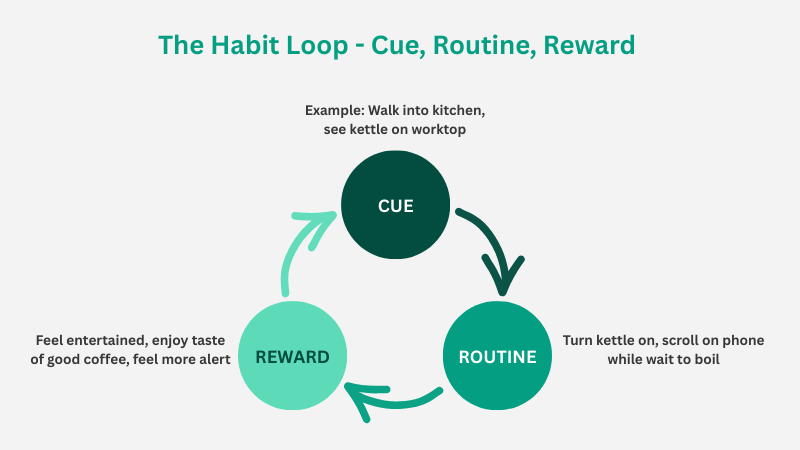
The habit loop is a three-step neurological pattern that governs every habit: a cue triggers a routine, which delivers a reward. This cycle repeats until the behaviour becomes automatic.
First popularised by journalist Charles Duhigg in his book The Power of Habit, the concept draws on decades of neuroscience research to explain the fundamental mechanism behind habitual behaviour. At its core, the habit loop consists of three elements that work together in a continuous cycle: a cue that triggers the behaviour, a routine that is the behaviour itself, and a reward that reinforces the pattern. This three-part structure explains why habits become so automatic over time—your brain literally chunks the entire sequence into a single neural pathway that requires minimal conscious effort to execute.
Origins in Neuroscience Research
The scientific foundation for the habit loop emerged from research at the Massachusetts Institute of Technology in the 1990s. Neuroscientists studying rats running through mazes discovered something remarkable: as the rats learned the maze route, their brain activity fundamentally changed. Initially, their brains showed intense activity throughout the learning process. After sufficient repetition, however, brain activity spiked only at the beginning and end of the routine—at the cue and the reward.
This research revealed that the brain was “chunking” the entire sequence of maze-running behaviours into a single automatic routine. The basal ganglia, a primitive region deep in the brain, took over the storage and execution of the habit, freeing up the prefrontal cortex for other tasks. This neurological efficiency is why you can drive home on autopilot whilst thinking about your dinner plans.
The Basal Ganglia and Habit Formation
The basal ganglia plays a central role in habit formation, pattern recognition, and the development of automatic behaviours. Located near the centre of the brain, this structure continues to function even when other parts of the brain are damaged. Research on patients with severe memory impairment has shown they can still form new habits despite being unable to form new conscious memories, demonstrating that habit formation operates through distinct neural pathways.
When you repeat a behaviour consistently in response to the same cue, the basal ganglia strengthens the neural connections for that specific sequence. Over time, these pathways become so efficient that the behaviour executes with minimal input from your conscious mind. This automaticity is simultaneously the source of habits’ power and the reason they’re so difficult to change once established.
QUICK WIN:
Pick one habit you do every day without thinking — making coffee, checking your phone, brushing your teeth. Now identify its three parts: what triggers it (cue), what you actually do (routine), and what satisfaction you get from it (reward). You’ve just mapped your first habit loop.
The Three Components of the Habit Loop
Every habit you’ve ever formed—whether brushing your teeth, checking your phone, or going for a morning run—follows the same three-part structure. Understanding each component gives you the leverage points needed to build new habits or modify existing ones.
Cue (The Trigger)
The cue is the trigger that initiates your habit loop. It’s the signal that tells your brain to shift into automatic mode and execute a particular routine. Cues can be external stimuli from your environment or internal states like emotions, thoughts, or physical sensations.
Research has identified five primary categories of habit triggers:
Location: Physical places trigger associated habits. Walking into your kitchen might cue snacking behaviour, whilst entering your gym triggers your workout routine.
Time: Specific times of day create powerful cues. Many people automatically crave coffee at 7am or feel the urge to scroll social media at 9pm, regardless of their actual caffeine needs or interest in updates.
Emotional state: Feelings serve as internal cues. Stress might trigger nail-biting, boredom prompts mindless phone checking, and anxiety can cue comfort eating.
Other people: Social contexts act as cues. Being around colleagues who smoke might trigger a cigarette craving, even if you hadn’t thought about smoking moments before.
Preceding action: One behaviour often cues the next. Finishing a meal might automatically trigger the desire for dessert, or closing your laptop could cue the habit of checking your phone.
The specificity of your cue matters enormously for habit formation. Vague cues like “when I have time” or “when I feel motivated” rarely build strong habits because they don’t provide clear signals for your brain to recognise. Effective cues are specific, consistent, and obvious.
QUICK WIN:
Think of a habit you want to build. Now write down a specific cue using this format: “After I [existing habit], I will [new habit].” For example: “After I pour my morning coffee, I will write for five minutes.” That specific trigger is far more effective than “I’ll write more.”
Routine (The Behaviour)
The routine is the actual behaviour you perform in response to the cue. It’s the visible part of the habit—the action you could point to and describe to someone else. Routines can be physical actions like exercising or brushing your teeth, mental processes like worrying or problem-solving, or emotional responses like feeling anxious or excited.
What makes routines powerful is their variability. The same cue can trigger different routines depending on which one has been reinforced through repetition. When you feel stressed (cue), you might go for a run, eat chocolate, call a friend, or bite your nails—the routine that activates depends on which behaviour your brain has learned to associate with that particular cue and reward combination.
This flexibility is crucial for habit change. You don’t need to eliminate the cue or forgo the reward; you can keep both whilst swapping in a different routine. A smoker who steps outside with colleagues (cue) for the social connection and stress relief (reward) can substitute a walk or breathing exercises for the cigarette.
Reward (The Reinforcement)
The reward is what makes the habit loop stick. It’s the positive reinforcement that tells your brain this particular sequence is worth remembering and repeating. Rewards satisfy a craving, deliver pleasure, or relieve discomfort, creating the neurological conditions that cement the habit in place.
Effective rewards share several characteristics. They must be immediate—your brain struggles to connect behaviours with consequences that occur hours or days later. This immediacy explains why habits with long-term benefits but no short-term payoff (like flossing or saving money) are difficult to establish, whilst habits with immediate pleasure but delayed negative consequences (like junk food or excessive screen time) form easily.
Rewards don’t have to be elaborate or expensive. A sense of accomplishment, a moment of pleasure, a reduction in discomfort, or even a simple checkmark on a habit tracker can serve as sufficient reward. The key is that your brain must perceive something valuable about completing the routine.
Often, the reward isn’t what you initially assume. Duhigg’s own research into his afternoon cookie habit revealed the reward wasn’t the cookie itself but rather the social interaction with colleagues that accompanied the trip to the cafeteria. Understanding the true reward is essential for successful habit modification.

How the Habit Loop Works in the Brain
Understanding the neuroscience behind the habit loop reveals why habits become so automatic and why willpower alone rarely succeeds in changing them. The process involves specific brain structures working together to create efficient neural pathways that require minimal conscious oversight.
Neurological Pathways
When you first learn a new behaviour, your prefrontal cortex—the brain’s executive control centre—actively manages every step. You consciously think through each component, make decisions, and monitor your performance. This initial phase requires significant mental energy and attention.
As you repeat the behaviour in response to the same cue, something remarkable happens. The responsibility for executing the routine gradually transfers from your prefrontal cortex to your basal ganglia. This shift is neuroplasticity in action—your brain physically rewiring itself to make the behaviour more efficient.
The neural pathways associated with the habit strengthen each time you complete the loop successfully. Myelin, a fatty substance that insulates neural connections, builds up around these pathways, making signal transmission faster and more reliable. Eventually, the entire cue-routine-reward sequence becomes a single “chunk” of behaviour that your brain can execute with minimal input from your conscious mind.
Automaticity and Cognitive Load
The development of automatic habits serves a crucial purpose: cognitive conservation. Your brain has limited processing capacity, and conscious decision-making consumes significant mental resources. By automating routine behaviours, your brain frees up cognitive capacity for novel situations, complex problems, and creative thinking.
Research suggests that up to 40-45% of our daily actions are habits rather than conscious decisions. This automaticity explains why you can brush your teeth whilst planning your day, drive familiar routes whilst holding conversations, or prepare your morning coffee without conscious thought about each step. How long this automaticity takes to develop varies considerably — research suggests habit formation timelines range from 18 to 254 days depending on complexity.
However, this efficiency comes with a significant drawback: once a habit becomes automatic, it becomes remarkably resistant to change. Your basal ganglia doesn’t distinguish between good habits and bad ones—it simply executes the patterns it has learned. This is why you might find yourself reaching for your phone even when you’ve decided not to, or why changing your eating habits feels like fighting against yourself.
QUICK WIN:
Notice your automatic habits today. Every time you catch yourself doing something without consciously deciding to — reaching for your phone, opening the fridge, biting a nail — pause and ask: “What just triggered that?” You’ll start seeing cues you never noticed before.
Using the Habit Loop to Build New Habits
Once you understand the three components of the habit loop, you can deliberately design new habits by engineering each element. This systematic approach dramatically increases your chances of success compared to relying on motivation or willpower alone.
Identifying Effective Cues
The foundation of any new habit is a clear, consistent cue. Successful habit formation requires cues that are obvious, specific, and impossible to miss. Vague intentions like “I’ll exercise more” or “I’ll read when I have time” fail because they don’t provide concrete signals that trigger the behaviour.
Instead, anchor new habits to existing routines or specific times and locations. “After I pour my morning coffee, I’ll write for ten minutes” creates a clear cue (pouring coffee) that you encounter daily. “When I arrive home from work, I’ll change into running clothes” ties the new habit (running) to a consistent daily event (arriving home).
Environmental design strengthens cues significantly. Placing your running shoes by the door, keeping a book on your pillow, or setting out your vitamins next to your coffee maker creates visual cues that prompt the desired behaviour. The more obvious and unavoidable your cue, the more reliably it will trigger your routine.
Making the Routine Easy
When building new habits, start with a version of the routine that’s almost absurdly easy. This approach, sometimes called the two-minute rule, suggests that new habits should take less than two minutes to complete initially. The goal isn’t to achieve your ultimate objective immediately but rather to establish the habit loop itself.
If you want to build a daily meditation habit, start with a single mindful breath. If your goal is reading more, commit to reading one page. If you’re aiming for a regular workout routine, begin by simply putting on your exercise clothes. These minimal routines seem trivial, but they achieve something crucial: they make showing up so easy that motivation becomes irrelevant.
Once the habit loop is established—once the cue reliably triggers the routine—you can gradually increase the intensity or duration. But in the early stages, consistency matters far more than performance. It’s better to meditate for one minute daily than to meditate for 30 minutes sporadically.
QUICK WIN:
Take a habit you’ve been wanting to build and shrink the routine to its two-minute version. “Exercise daily” becomes “put on trainers.” “Read more” becomes “read one page.” “Meditate” becomes “take three deep breaths.” Try that tiny version tomorrow — just once. The loop matters more than the length.
Choosing Rewarding Outcomes
The reward must feel satisfying immediately after completing the routine. Delayed rewards, no matter how significant, won’t reinforce the habit loop effectively. This creates a challenge for habits where the major benefits only appear in the future—exercising for long-term health, saving for retirement, or practising a skill to gain expertise.
The solution is to build immediate rewards into habits that primarily offer delayed benefits. After completing your workout, allow yourself a favourite podcast or a warm shower you enjoy. After saving money, move a physical object into a “savings jar” to create a tangible sense of progress. After practising a skill, record your session in a habit tracker and enjoy the satisfaction of maintaining your streak.
Some effective immediate rewards include: tracking your progress visually on a calendar or app, giving yourself a moment of acknowledgement (“I did it”), pairing the habit with something enjoyable (listening to music whilst exercising), or using habit stacking to make the next activity a reward (after meditation, you get to have your coffee).
Practical Examples
Building a morning exercise habit: Cue—alarm goes off at 6am and workout clothes are laid out beside the bed. Routine—put on workout clothes and do five minutes of movement (gradually increase over time). Reward—enjoy a favourite breakfast or morning coffee whilst feeling accomplished about starting the day actively.
Developing a reading habit: Cue—getting into bed at night with book placed on pillow. Routine—read one page (or for a set time like five minutes). Reward—the enjoyment of the story itself plus the satisfaction of ticking off the day on a reading calendar visible from bed.
Creating a daily writing practice: Cue—sitting down at desk with morning coffee. Routine—write 50 words or for two minutes before checking email. Reward—immediately checking email (something you want to do anyway) becomes the reward for completing writing first.
Using the Habit Loop to Break Bad Habits
Breaking unwanted habits requires a different approach than building new ones. You can’t simply delete a habit loop from your brain—the neural pathways remain even years after you’ve stopped the behaviour. However, you can use your understanding of the habit loop to systematically dismantle problematic patterns.
Identifying Your Habit Loops
The first step in breaking a bad habit is dissecting its components. Many people jump straight to trying to eliminate the routine without understanding the full loop, which rarely succeeds. Instead, invest time in identifying exactly what’s happening:
Track your behaviour for several days, noting what happens immediately before you engage in the unwanted routine. What are you doing? Where are you? Who’s around? What time is it? What emotions are you experiencing? This detective work reveals your cues.
Next, examine what happens after you complete the routine. What changes? Do you feel different emotionally? Has your environment changed? What benefit, however small, does the habit provide? This investigation uncovers the reward your brain is seeking.
Common cue-routine-reward patterns for problematic habits include: feeling bored (cue) → scrolling social media (routine) → entertainment and stimulation (reward); finishing a meal (cue) → eating dessert (routine) → pleasant taste and sense of completion (reward); feeling stressed (cue) → smoking a cigarette (routine) → nicotine hit plus break from stressful environment (reward).
Keeping the Cue and Reward, Changing the Routine
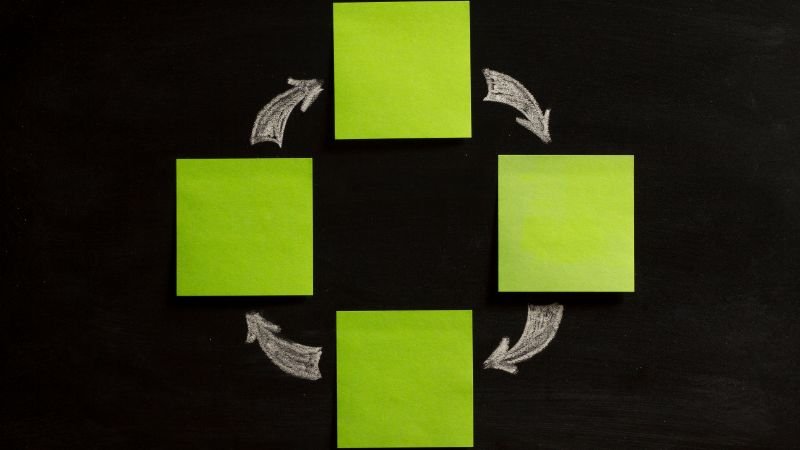
The golden rule of habit change is this: you don’t eliminate the cue or remove the reward; you insert a different routine that delivers the same reward. This approach works with your brain’s existing patterns rather than fighting against them.
Once you’ve identified the cue and the true reward, experiment with alternative routines that satisfy the same craving. If the afternoon snack habit is really about taking a mental break (not hunger), try a five-minute walk, a brief conversation with a colleague, or a few minutes of stretching. If the evening wine habit is about relaxing after work, experiment with a warm bath, reading, or an evening walk.
The key is experimentation. Test different routines and honestly assess whether they satisfy the underlying craving. After trying an alternative routine, wait fifteen minutes and check whether you still want the original behaviour. If the craving has subsided, you’ve found a viable substitute. If it persists, the alternative routine isn’t delivering the right reward, and you need to keep experimenting.
QUICK WIN:
Next time you catch yourself doing a habit you’d like to change, don’t try to stop it. Instead, grab a pen and write down three things: what you were doing just before (your cue), what you did (the routine), and how you felt immediately after (the reward). Do this three times over the next few days. The pattern will reveal itself.
Example: Replacing Smoking with Another Behaviour
Consider someone trying to quit smoking. The habit loop might look like: feeling stressed at work (cue) → going outside for a cigarette with colleagues (routine) → nicotine hit, fresh air, social interaction, and break from work (multiple rewards).
Simply trying to “stop smoking” through willpower fails because it attempts to eliminate the routine without addressing the cue or replacing the rewards. A more effective approach identifies which rewards matter most and finds alternative routines that deliver them.
If the primary reward is the social break, the person might keep the cue and social element but swap the cigarette for a walk with colleagues. If the main reward is the stress relief from stepping away from the desk, they might substitute a breathing exercise or brief meditation when stress hits. If the nicotine craving is strongest, they might use nicotine replacement therapy whilst also building alternative stress-management routines.
The most successful approach often involves multiple routine substitutions targeting different rewards in the original habit loop. This requires patience and experimentation, but it works with your brain’s natural patterns rather than demanding pure willpower to override them.
Common Habit Loop Mistakes
Understanding the habit loop in theory is one thing; applying it effectively is another. Most people make predictable errors that undermine their habit-building or habit-breaking efforts. Recognising these mistakes helps you avoid them. Understanding why habits fail is just as important as knowing how to build them.
Vague Cues
The most common mistake in habit formation is relying on vague or inconsistent cues. Statements like “I’ll meditate when I feel stressed” or “I’ll exercise when I have time” feel reasonable but fail in practice because they don’t create specific signals your brain can recognise.
Your basal ganglia needs consistency to build automatic patterns. Every time you encounter the same cue and perform the same routine, you strengthen that particular neural pathway. When your cue varies—sometimes exercising in the morning, sometimes at lunch, sometimes in the evening, sometimes not at all—you’re training multiple different pathways weakly rather than one pathway strongly.
The solution is specificity. Instead of “when I have time,” use “immediately after I pour my morning coffee.” Instead of “when I feel motivated,” use “when I put my child down for their afternoon nap.” The more specific and consistent your cue, the more reliably it will trigger your routine.
Delayed Rewards
Many worthwhile habits offer their primary rewards in the distant future. Regular exercise prevents chronic disease, financial saving builds long-term security, and skill practice eventually leads to mastery—but none of these deliver immediate gratification. Your brain’s reward circuits, however, operate on a much shorter timeframe.
Trying to build habits purely on the basis of future rewards is fighting against your neurology. The habit loop requires immediate reinforcement to establish the neural pathway. Waiting weeks or months to see results from your new routine means your brain receives no signal that the behaviour is worth repeating.
The fix is creating immediate rewards that accompany the long-term benefits. Enjoy your favourite music whilst exercising, give yourself a small treat after saving money, or use a habit tracker to create instant satisfaction from maintaining a streak. These immediate rewards bridge the gap until the behaviour becomes automatic and intrinsically rewarding.
Unrealistic Routines
Enthusiasm often leads people to design overly ambitious routines that prove unsustainable. Deciding to meditate for 30 minutes daily when you’ve never meditated before, committing to an hour-long workout when you’re currently sedentary, or planning to write 2,000 words daily when you haven’t written in months—these goals set you up for failure.
The problem isn’t the ultimate objective but the starting point. Your habit loop needs to become automatic before you can scale up. If the initial routine is so difficult or time-consuming that you regularly skip it, you’re training the habit of not doing the behaviour rather than establishing the positive pattern.
Start with a version of the routine that’s almost ridiculously easy—so easy that doing it requires virtually no motivation. Once that minimal routine has become automatic (typically after several weeks of consistency), you can gradually increase the challenge. But in the formation phase, consistency trumps intensity every time.
QUICK WIN:
Design one complete habit loop right now. Write it in this format: “When [specific cue], I will [two-minute routine], and then I’ll reward myself by [immediate reward].” Put this somewhere you’ll see it tomorrow morning. You’ve just engineered your first deliberate habit loop.
The Power of Understanding Your Habit Loops
The habit loop isn’t just an academic concept—it’s a practical framework that explains the majority of your daily behaviour. Understanding how cues trigger routines that deliver rewards gives you unprecedented leverage over your habits.
Rather than viewing habits as mysterious forces you’re subject to, you can approach them as systems you can engineer through systematic habit formation. Want to build a new habit? Design a clear cue, make the initial routine easy, and create an immediate reward. Need to break a problematic habit? Identify the cue and reward, then experiment with alternative routines that satisfy the same craving.
This systematic approach doesn’t eliminate the need for effort or persistence, but it dramatically improves your odds of success. You’re working with your brain’s natural patterns rather than fighting against them, using the same neurological mechanisms that created your unwanted habits to build the ones you desire instead.
The habit loop is always operating, whether you’re aware of it or not. The question is whether you’ll understand it well enough to design your habits deliberately or continue forming them unconsciously. With this knowledge, you now have the tools to build the behaviours that will shape your life in the direction you choose.
RESOURCES:
I only recommend resources that I either use personally or have researched and feel are genuinely helpful for my readers. Resources sometimes contain affiliate links; if you purchase through these, I may earn a small commission at no extra cost to you.
Essential Reading on Habits and Behaviour Change:
Atomic Habits by James Clear — The definitive modern guide to building better habits through small, consistent changes. Paperback | Kindle | Audible
Tiny Habits by BJ Fogg — A practical, research-based system for starting with the smallest possible behaviour and building from there. Paperback | Kindle | Audible
The Power of Habit by Charles Duhigg — The book that popularised the habit loop concept, packed with research and real-world examples. Paperback | Kindle | Audible
Related Articles from Marginal Gains:
Habit Formation: The Complete Evidence-Based Guide
The Two-Minute Rule for Habit Formation
Environment Design for Better Habits
How to Break Bad Habits: A Psychologist’s Guide
Keystone Habits: Definition, Origin and Examples
I'm Simon Shaw, a Chartered Occupational Psychologist with over 20 years of experience in workplace psychology, learning and development, coaching, and teaching. I write about applying psychological research to everyday challenges - from habits and productivity to memory and mental performance. The articles on this blog draw from established research in psychology and behavioural science, taking a marginal gains approach to help you make small, evidence-based changes that compound over time, allowing you to make meaningful progress in the areas you care about most.