Keystone Habits: Definition, Origin and Examples

Some habits matter more than others.
This seems obvious when you say it aloud, but people often treat all habits as equivalent. They create lists of ten or fifteen habits they want to build, then wonder why they’re overwhelmed and making no real progress on any of them.
The concept of keystone habits offers a different approach. Rather than trying to change everything at once, you identify the one or two habits that, when established, make other positive changes more likely to happen. These habits create cascading effects across multiple domains of your life, leveraging a small initial investment into broad transformation.
Understanding which habits function as keystones in your particular life can be the difference between exhausting yourself with low-value changes and creating genuine momentum that builds on itself.
What Makes a Habit a Keystone?
A keystone habit is a single behaviour that, once established, triggers positive changes across multiple areas of your life — much like the keystone in an arch holds all the other stones in place.
The term comes from architecture. A keystone is the wedge-shaped stone at the apex of an arch that holds all the other stones in position. Remove it and the structure collapses. It’s not the largest stone or the most visible, but it’s the one that makes everything else work.

In behavioural psychology, we use the term somewhat differently. A keystone habit doesn’t hold other habits in place directly. Rather, it creates conditions that make other positive behaviours more likely.
Keystone habits share several characteristics. They produce small wins that build confidence and create momentum. They establish platforms that make subsequent behaviours easier to execute. And they often shift your identity in ways that naturally align with other positive changes.
Small Wins That Build Momentum
Keystone habits create what researchers call “small wins” – modest successes that demonstrate you can change, which then makes other changes feel more achievable. Look out for the teal boxes in this (and our other) articles that suggest quick wins you can make immediately.
When you successfully establish a keystone habit, you’re not just doing that specific behaviour. You’re proving to yourself that you can decide to change something and actually follow through. That proof is psychologically significant. It shifts your self-concept from “someone who tries to change but doesn’t” to “someone who successfully changes behaviour”.
This shift in self-concept matters enormously for subsequent habits. If you believe you can change, you’re more likely to attempt changes. If you believe you can’t, you won’t bother trying even when the change would benefit you.
QUICK WIN:
Make your bed tomorrow morning before checking your phone. Just once. This takes 90 seconds and proves you can complete an intention immediately. That proof matters more than the made bed.
Platform Effects
Some habits create platforms that make other behaviours easier. Exercise is perhaps the most common example. When you exercise regularly, you tend to sleep better, which improves decision-making, which makes healthy eating easier, which provides more energy, which supports better exercise.
Example: Regular exercise (the keystone) creates eight distinct positive effects. Each effect then enables further improvements, creating compound benefits across multiple life domains. This is why keystone habits are so powerful—one change triggers many others.
The habit creates a positive feedback loop where the behaviour reinforces conditions that support the behaviour. But it also creates spillover effects into domains that seem unrelated to the original habit.
People who establish regular exercise often report improvements in work performance, relationship quality, and financial decision-making. Not because exercise directly affects these domains, but because the physiological and psychological effects of exercise (better sleep, improved mood, increased energy) create conditions where better decisions become easier across multiple areas.
Identity Shifts
Perhaps the most powerful characteristic of keystone habits is their ability to shift how you see yourself. When you exercise regularly, you stop being “someone who should exercise” and become “a person who exercises”. That identity shift is subtle but profound. Once you see yourself as someone who exercises, decisions about sleep, nutrition, and time management start aligning with that identity automatically. You don’t have to force yourself to eat better — it feels inconsistent with who you are not to.
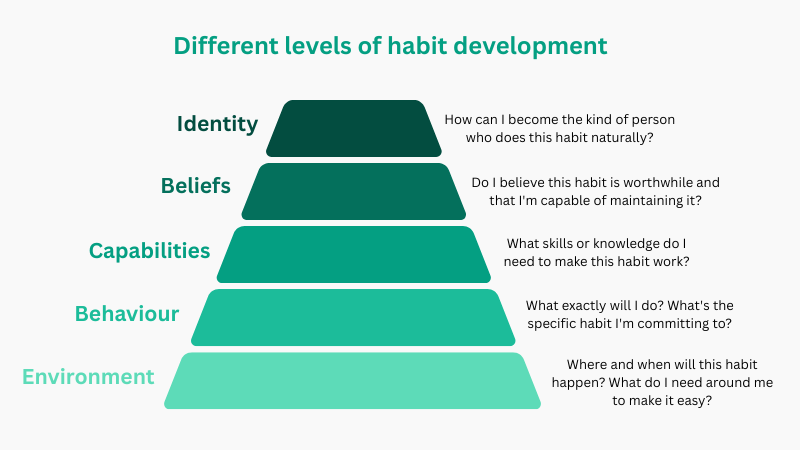
This is why keystone habits are so powerful. They don’t just change one behaviour. They change who you think you are, which then changes dozens of small decisions you make throughout each day.
Common Keystone Habits
Whilst keystone habits are somewhat individual – what serves as a keystone for you depends on your specific circumstances and goals – certain habits function as keystones for many people, and you can see these principles in action in our look at the daily habits of successful people. Understanding why they work can help you identify your own keystones.
Regular Exercise
Exercise is probably the most widely applicable keystone habit. The research here is remarkably consistent: people who establish regular exercise see improvements across multiple domains that seem unrelated to physical activity.
Exercise improves sleep quality, which affects everything from emotional regulation to immune function. It reduces stress and anxiety, which improves decision-making and relationship quality. It provides a sense of accomplishment that builds self-efficacy. It creates structured time in your day that can become an anchor for other habits.
The cascading effects of regular movement created conditions where productivity became easier. Our guide on the best exercise for brain health explains these cognitive benefits in detail.
The specific form of exercise matters less than consistency. Running, swimming, weightlifting, yoga, cycling – they all produce similar keystone effects if done regularly. Choose something you’ll actually do rather than something you think you should do.
QUICK WIN:
Walk for 10 minutes after lunch tomorrow. No destination, no fitness tracking, no agenda. Just walk. Notice how you feel afterwards compared to sitting at your desk.
Making Your Bed
This sounds trivial until you understand the mechanism. Making your bed is valuable not because it matters whether your bed is made, but because it’s a completed task first thing in the morning.
Completing your first task sets a tone of accomplishment. You’ve decided to do something and immediately done it. This small success makes the next task feel more achievable, which makes you more likely to do it, which creates momentum.
The research on small wins shows that early successes in a day predict higher achievement throughout that day. Making your bed is about the smallest possible success you can create, which makes it remarkably powerful as a daily keystone.
It’s also a visible commitment to order. Walking past your made bed throughout the day provides a small reminder that you’re someone who follows through on intentions. This matters more than it seems.
Family Meals
Eating together as a family (or household) functions as a keystone habit in several ways. It creates structure in your day – you need to be home at a certain time, which influences other scheduling decisions. It establishes connection time that strengthens relationships. It makes nutrition more visible and deliberate.
The research on family meals is striking. Children who eat regular family meals have better academic outcomes, lower rates of substance abuse, better mental health, and healthier eating patterns. Adults who maintain regular family meals report higher relationship satisfaction and better stress management.
But the mechanism isn’t magic. Family meals work as a keystone because they create a forcing function that prioritises connection over individual convenience. That reprioritisation then influences dozens of other decisions.
Tracking Your Spending
For financial behaviour, tracking spending often functions as a keystone. Not budgeting necessarily – just the simple act of recording what you spend.
When you track spending, you become more conscious of spending decisions. That consciousness changes behaviour without requiring willpower or complex budgeting systems. You see the £4 coffee become £80 per month become £960 per year, and suddenly the small decisions feel more significant.
But tracking also creates a foundation for other financial habits. Once you’re tracking, you naturally start to notice patterns. Those patterns suggest opportunities for optimisation. Before long you’re making different decisions about subscriptions, purchases, and priorities. Not because someone told you to, but because the information created natural motivation for change.
Morning Routine
A consistent morning routine often serves as a keystone, though what the routine contains matters less than the fact that it exists and it’s consistent.
Morning routines work as keystones because they establish predictability and control at the start of your day. Before the chaos and demands of the day take over, you’ve created a pocket of time where you decide what happens. That sense of agency carries forward.
The routine also serves as an anchor for other habits. Once you have a consistent morning sequence, it becomes easier to add new habits by attaching them to existing elements of that sequence. This is habit stacking in practice, and it’s significantly easier when you have a stable foundation to build on.
QUICK WIN:
Tomorrow morning, do these three things in the same order before checking your phone: drink water, make bed, take five deep breaths. Same order, same sequence. That’s day one of your morning routine.
Your 5-Step Keystone Identification Process
The habits I’ve described work as keystones for many people, but your keystones might be different. Here’s a systematic process for identifying which habits will create the cascading effects you’re looking for.
Step 1: What are Your Current Life Challenges?
Begin by listing 3-5 areas of your life that need attention. Be specific:
- “I’m constantly exhausted by 3pm”
- “I can’t focus for more than 20 minutes”
- “I’m arguing with my partner more frequently”
- “I’m spending beyond my means each month”
- “I feel disconnected from friends”
Write these down. The act of articulating challenges makes them more concrete and addressable.
Step 2: Will the Habit Impact Multiple Areas?
For each potential keystone habit you’re considering, ask: if I establish this habit, what other areas of my life would likely improve?
If the answer is “just this one specific thing”, it’s probably not a keystone. If the answer is “this would affect my energy, my mood, my relationships, my work performance”, you might have found one.
For example, if you’re considering starting to cook dinner at home rather than eating takeaway, think about the cascading effects. You’d save money, which creates financial breathing room. You’d probably eat more healthily, which affects energy and mood. You might eat with family or housemates, which strengthens relationships. You’d have more control over ingredients, which supports other health goals.
Those cross-domain effects suggest cooking at home could function as a keystone habit for you.
Step 3: Does the Habit Involve an Identity Shift?
Ask yourself: if I established this habit, how would it change how I see myself?
Keystone habits often involve identity shifts that then influence many other decisions. If you start running three times per week, you begin to see yourself as a runner. That identity shift influences what you eat (runners fuel properly), how you spend your time (runners prioritise sleep), what you do on holiday (runners seek out routes).
None of these are forced decisions – they flow naturally from the identity change. Habits that shift your identity tend to have broader effects than habits that are just behaviours you do.
Step 4: Does the Habit have ‘Platform Effects’?
Some habits create foundations that make other habits easier. Keystone habits often have this platform quality.
If you establish a habit of going to bed at a consistent time, you’ve created a platform for better sleep, which creates a platform for better energy, which creates a platform for better exercise and nutrition and work performance. The initial habit enables the downstream habits without you having to rely on willpower for each one individually.
Look for habits that create enabling conditions rather than habits that exist in isolation.
Step 5: Choose Your ONE Keystone to Start
Review your answers from steps 1-4. Which single habit:
- Addresses multiple challenges from your Step 1 list?
- Creates effects across several life domains (Step 2)?
- Would meaningfully shift your identity (Step 3)?
- Enables other positive behaviours (Step 4)?
- Feels achievable given your current circumstances?
That’s your keystone. Start there. Only there. Master this one habit before considering adding others.
Building a Keystone Habit
Understanding that a habit could be a keystone doesn’t automatically make it easy to establish. You still need to follow the fundamental principles of habit formation.
Start Smaller Than Seems Necessary
The value of a keystone habit lies in its cascading effects, not in the intensity of the initial behaviour. This means you can start with a version that feels almost embarrassingly small, because it’s the establishment of the pattern that matters.
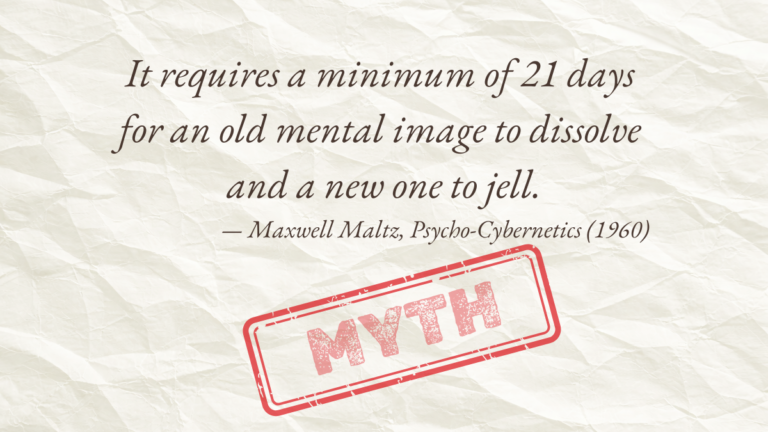
If exercise is your keystone, you don’t need to start with hour-long sessions. Five minutes counts. Ten minutes counts. What matters is doing it consistently enough that it becomes automatic and begins to shift your identity. Research on how long habits take to form confirms that this automaticity rarely arrives in the 21 days popular wisdom suggests — patience with the process is essential.
Example: Sarah wanted exercise to be her keystone habit. She’d previously tried committing to 45-minute gym sessions four times weekly – and failed repeatedly after two weeks. Instead, she started with a 7-minute walk around her block every morning before breakfast. Just 7 minutes. After three weeks, this felt automatic. She then extended to 10 minutes. Then 15. Within three months, she was walking 25 minutes daily and had naturally added weekend cycling because “she was someone who moves in the morning”. The tiny start made everything else possible.
I often suggest people aim for a version of the keystone habit that they could sustain even on their worst days. That becomes the minimum viable version. On good days you might do more, but the minimum is what builds the actual habit.
QUICK WIN:
Take your intended keystone habit and halve the time commitment. Then halve it again. That quarter-size version is your starting point. Better to succeed at something small than fail at something ambitious.
Remove Friction Ruthlessly
Keystone habits are valuable enough that it’s worth investing effort in making them as easy as possible to execute. Our guide on environment design for habits provides detailed strategies, but the core principle is simple: reduce the steps between intention and action.
This might mean:
- Preparing the night before so morning exercise requires no decisions
- Setting up your environment so the habit is the path of least resistance
- Scheduling the time and protecting it from other demands
- Simplifying the behaviour to its essential core
The goal is to make the keystone habit so easy that you can do it even when motivation is low, energy is limited, or circumstances aren’t ideal. That resilience is what makes it actually function as a keystone over time.
Focus on Consistency Over Intensity
A keystone habit derives its power from repetition, not from any single instance being particularly impressive. This means consistency matters far more than intensity.
Better to exercise for ten minutes daily than to plan for hour-long sessions that you only manage twice per week. Better to cook a simple dinner five nights per week than to plan elaborate meals that exhaust you and lead to ordering takeaway.
The cascading effects of keystone habits come from the regular repetition establishing new patterns and new identities. Those effects don’t accumulate from sporadic intensity. As James Clear explains in his book Atomic Habits, small improvements repeated consistently create remarkable results through compound effects.
QUICK WIN:
Commit to your keystone habit for just seven days. Not forever. Just seven days. After seven consecutive days, you’re allowed to reassess. But until then, show up daily even if you do the absolute minimum version.
Ready to Build Your First Keystone Habit?
Use our interactive worksheet to identify your keystone habit and create a personalised action plan in just 10 minutes. It’s free and there’s no sign-up required.
When Keystone Habits Aren’t Enough
Keystone habits are powerful, but they’re not magic. Some changes you want to make won’t flow naturally from establishing a keystone. They require deliberate, separate effort.
If you want to learn a language, establishing an exercise habit might improve your cognitive function and discipline, but it won’t teach you vocabulary. You still need to study. The keystone might make the studying easier, but it doesn’t replace it.
Similarly, keystone habits work well for creating broad improvements in wellbeing and performance, but they’re less useful for specific skill acquisition. They change the conditions in which you operate, but they don’t directly build technical capabilities.
Understanding this distinction prevents the mistake of expecting a keystone habit to solve problems it can’t address. Exercise is genuinely transformative for many aspects of life. It won’t make you better at spreadsheets unless you also practise working with spreadsheets.
Avoiding Keystone Dependence
There’s a subtle trap that can develop around keystone habits. Because they create such broad positive effects, you can become psychologically dependent on them in ways that create vulnerability.
If exercise is your keystone and injury prevents exercise for several months, do all the downstream habits collapse? If family dinners are your keystone and your partner’s work schedule changes, does your evening routine disintegrate?
The most resilient habit systems have some redundancy. If one keystone becomes unavailable temporarily, you have another habit that can provide some of the same stabilising effects.
Example of building redundancy: Michael relied on morning runs as his keystone – they improved his mood, energy, and focus throughout the day. When a knee injury forced him to stop running, everything else started sliding: he woke later, skipped breakfast, felt foggy at work. Rather than waiting to heal, he identified what the running actually provided: morning movement, time outdoors, and mental clarity. He built temporary redundancy through 15-minute morning walks (gentle on the knee) followed by 5 minutes of breathing exercises. Not the same as running, but enough to maintain the platform effects whilst his knee healed. When he returned to running, he kept the walks as a backup option for travel or poor weather.
This doesn’t mean you need multiple keystones from the beginning. But as your habit system matures, it’s worth considering: if my primary keystone habit became impossible for three months, what would prevent everything else from unravelling?
Your Keystone Might Not Look Like Everyone Else’s
The examples I’ve provided are common keystones, but they’re not universal. Your circumstances, personality, core values, goals and other existing habits all influence what will function as a keystone for you.
For an introverted knowledge worker, a keystone might be protecting morning time for deep work before meetings and messages intrude. For someone recovering from burnout, it might be a firm boundary around work hours that creates space for rest and relationships. For someone with caring responsibilities, it might be a regular support network or respite care that prevents everything else from being sacrificed to caretaking.
The question isn’t “which keystone habits should I have?” The question is “which habits, if established, would make the life I want to live significantly easier to create?”
Answer that honestly, and you’ve found your keystone.
RESOURCES:
I only recommend resources that I either use personally or have researched and feel are genuinely helpful for my readers. Resources sometimes contain affiliate links; if you purchase through these, I may earn a small commission at no extra cost to you.
Essential Reading on Habit Formation:
Atomic Habits by James Clear — The definitive modern guide to building better habits through small, consistent changes. Paperback | Kindle | Audible
The Atomic Habits Workbook — Practical exercises and templates for implementing the principles from Atomic Habits. Paperback | Kindle | Audible
Related Articles from Marginal Gains:
Habit Formation: The Complete Evidence-Based Guide
Habit Stacking: Build Multiple Habits at Once
Environment Design for Better Habits
How to Break Bad Habits: A Psychologist’s Guide
Why Habits Fail: Common Mistakes and How to Avoid Them
I'm Simon Shaw, a Chartered Occupational Psychologist with over 20 years of experience in workplace psychology, learning and development, coaching, and teaching. I write about applying psychological research to everyday challenges - from habits and productivity to memory and mental performance. The articles on this blog draw from established research in psychology and behavioural science, taking a marginal gains approach to help you make small, evidence-based changes that compound over time, allowing you to make meaningful progress in the areas you care about most.