-

Mindfulness for Focus: Stop Your Mind Racing
Your mind wanders about 47% of the time you’re awake, according to research by Harvard psychologists Killingsworth and Gilbert — who tracked 250,000 real-time data points from 2,250 people going about their daily lives. You can download the tracking app used in this study for free. Nearly half your day spent mentally somewhere else —…
-

Sleep and Cognitive Function: The Complete Guide
We spend roughly one-third of our lives asleep, yet most people treat sleep as the first thing to sacrifice when life gets busy. Few decisions cost more cognitively. Sleep and cognitive function are inseparably linked — sleep isn’t downtime for your brain but an active state during which essential maintenance work determines how well you…
-

Stress Management for Mental Performance
You know that feeling when you’re staring at your screen, trying to remember what you were just doing, whilst simultaneously worrying about three other things? That’s stress literally shrinking your brain’s working capacity in real-time. Effective stress management for mental performance isn’t a luxury — it’s what determines whether your brain actually functions well under…
-

Social Connection and Brain Health: Why Your Brain Needs People
I’ll be honest — as someone who describes themselves as a “raging introvert,” writing this article has been uncomfortable. The research on social connection and brain health is unequivocal: your brain literally needs other people to function at its best. This isn’t feel-good philosophy or pop psychology. It’s neuroscience. Social connection isn’t just pleasant —…
-

How to Recover From Mental Burnout: A Psychologist’s Guide
Back in the day, I’d lecture my students on the dangers of chronic workplace stress: high workloads, low control, poor coping mechanisms. I remember drawing neat diagrams of the stress response on whiteboards, explaining the Social Readjustment Rating Scale, demonstrating biofeedback techniques. What was causing the peculiar cognitive collapse that accompanies chronic stress? Not just…
-

How to Improve Working Memory: 7 Practical Strategies
You walk into a room and immediately forget why you’re there. Someone tells you their phone number and it vanishes before you can write it down. You’re following a recipe but lose track of which step you’ve completed. If this sounds familiar, you’re not alone — and it’s not a sign of a failing brain.…
-

How to Learn Any Skill Fast: The Deliberate Practice Method
You want to learn guitar, speak conversational Spanish, or master data visualisation for work. The thought of dedicating years to become competent feels overwhelming, so you never start. Meanwhile, you watch others seemingly pick up new skills with ease whilst you remain stuck in place. If you’ve ever wondered how to learn any skill fast…
-

How to Keep Memory Sharp With Age: Psychology-Backed Tips
You walk into a room and forget why you’re there. A familiar name escapes you mid-conversation. You can’t quite recall where you left your phone. Again. These moments feel alarming, particularly as we age. The immediate worry: “Is this the beginning of something serious?” The reality is usually far less dramatic. Most age-related memory changes…
-
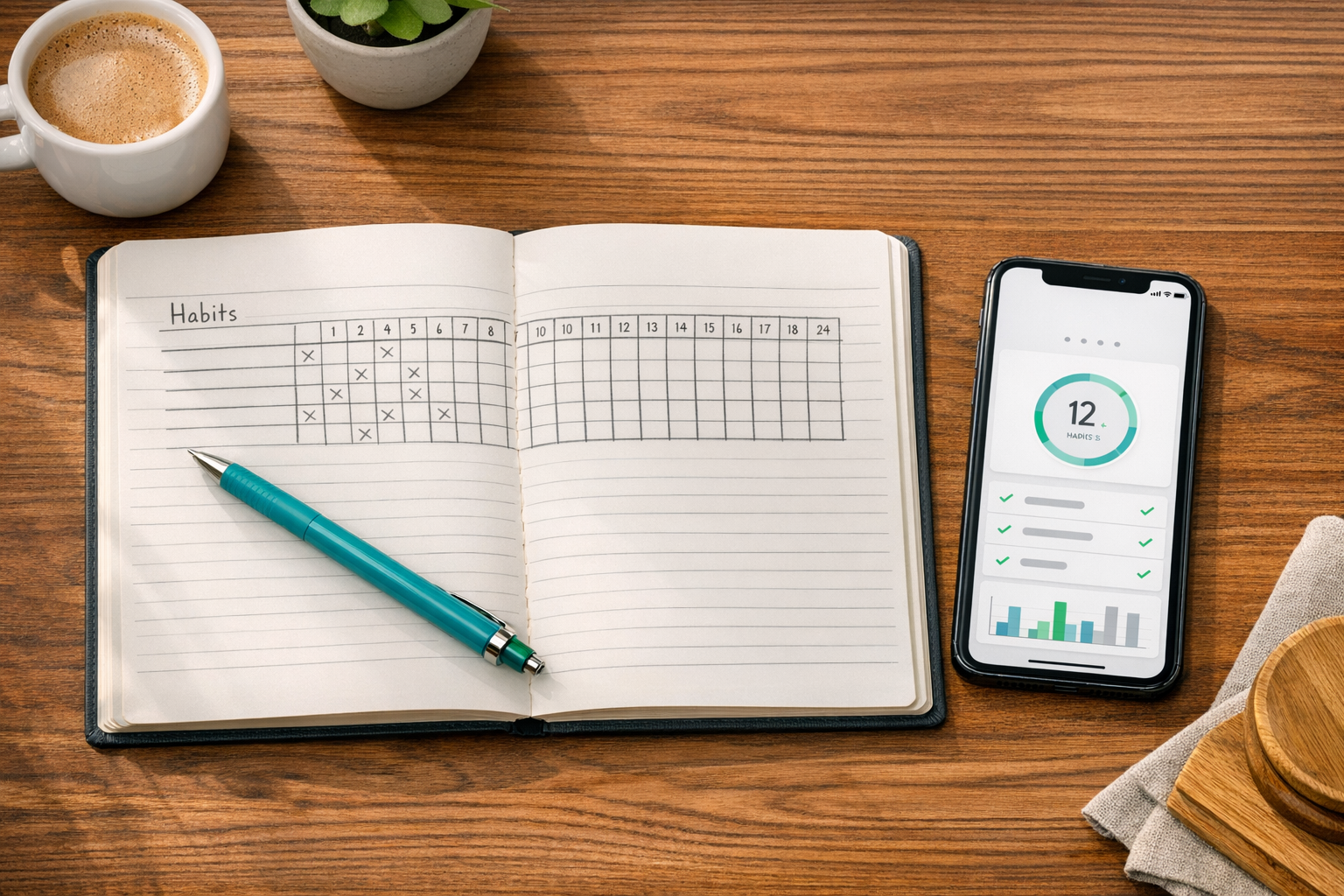
Bullet Journal vs Digital Habit Tracking: Which Works?
You’ve decided to track your habits. Excellent choice — research consistently shows that tracking significantly increases your likelihood of success. But now you face a surprisingly contentious question: paper or digital? The bullet journal vs digital habit tracking debate has created devoted camps on both sides. Bullet journal enthusiasts swear by the tactile satisfaction of…
-

How to Memorise a Presentation Without Notes
Learning how to memorise a presentation is one of the most valuable skills a professional can develop — yet most people approach it the wrong way. You’ve created brilliant slides. You’ve researched your topic thoroughly. But when you imagine standing in front of that audience, panic sets in. What if you forget what to say?…
-

Do Mnemonic Devices Work? How to Boost Memory
If you’ve ever used the phrase “Richard Of York Gave Battle In Vain” to remember the colours of the rainbow, or arranged items on your shopping list so their first letters create a word, you’ve used a mnemonic device. These memory aids promise to transform how we learn and retain information — but do mnemonic…
-

How to Remember What You Read: The Dual Coding Method
If you want to know how to remember what you read, the answer lies in a counterintuitive shift: stop relying on words alone. You finish an excellent book on productivity. The ideas resonated deeply. You felt motivated to apply them. But a week later, when someone asks what you learned, your mind goes blank. You…